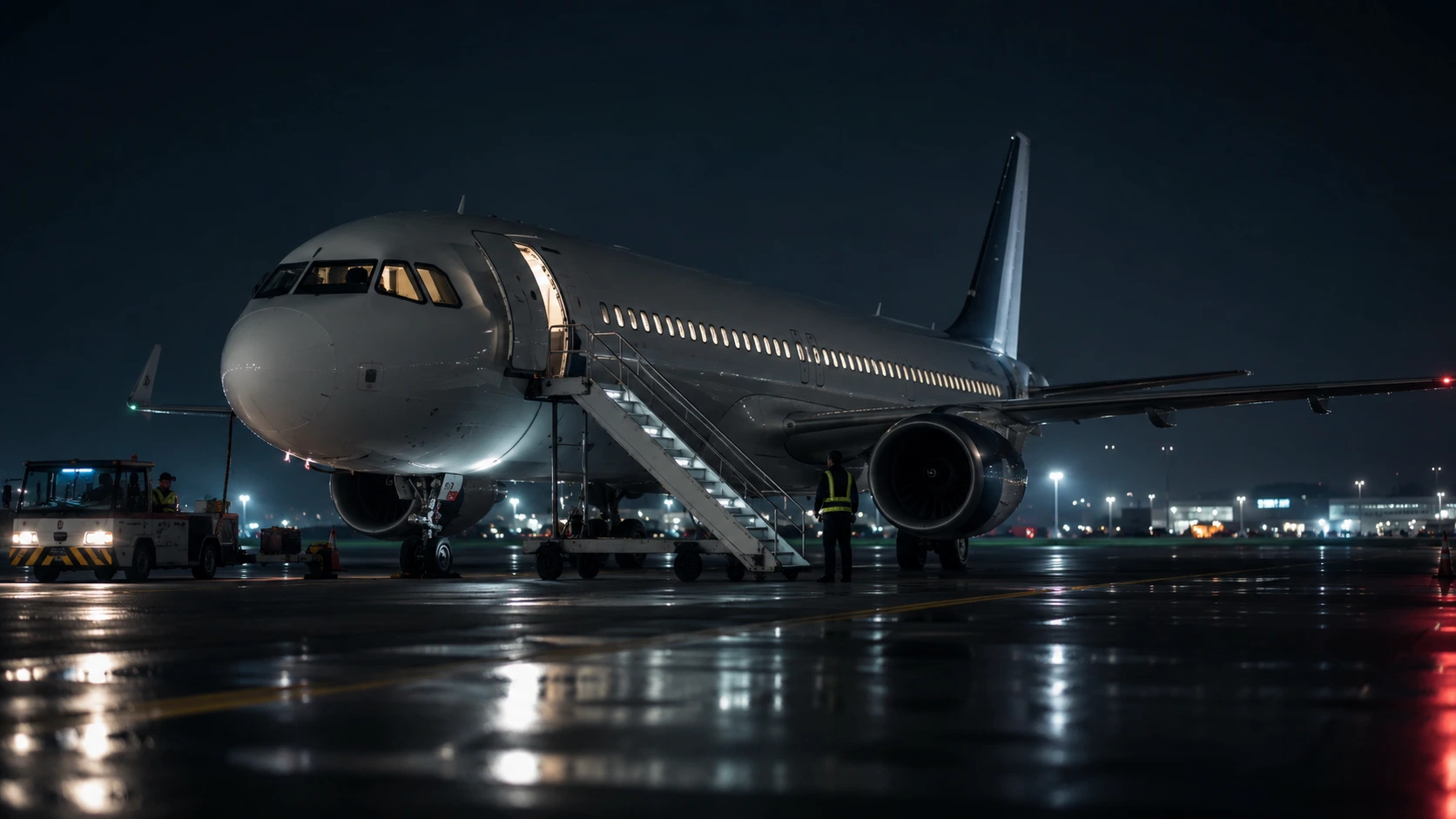
While fans are refreshing resale apps and squeezing into middle seats to chase the Knicks-Spurs Finals or the Hurricanes-Golden Knights chase for the Cup, the athletes themselves are moving through the sky on a system almost no one sees. There is no security line, no boarding group, no gate. The roster walks across a tarmac, climbs a stairway into a jet configured for fewer than half the passengers a normal airliner carries, and is wheels-up within an hour of the final buzzer. In modern professional sports, the airplane is not a logistical afterthought. It has quietly become part of the roster.
The short version is this: elite teams do not fly the way you fly. They move on dedicated, custom-configured charter flights, and over the last decade the design of those aircraft has turned into a genuine arms race tied to player health and on-court results. Here is how the team charter world actually works, from the jets to the choreography of a postgame departure.
The NBA runs the most sophisticated air operation in American team sports, and it is worth understanding because the rest of the industry increasingly takes its cues from it. For years the league has moved its teams on a fleet of eleven Boeing 757 jets operated by Delta Air Lines. These are not ordinary 757s. A commercial version of that aircraft seats close to 200 passengers. The NBA's VIP aircraft carry just 72, arranged four-abreast in a mix of first and business-style recliners, some facing each other across tables built for film study, card games, and the long quiet hours of a road trip. Officially the planes are controlled by the league, which gives the NBA priority and then allows the aircraft to be shared with the WNBA and, at times, NHL and MLB clubs whose seasons do not fully overlap.
That fleet is now being replaced, and the upgrade reveals exactly how seriously the league treats travel. In a deal approved by the U.S. Department of Transportation in 2024, the NBA is leasing a fleet of up to 14 custom Airbus A321neo jets, outfitted with VIP interiors and operated again by Delta. The headline features read less like an airline cabin and more like a recovery clinic at altitude: lie-flat beds, onboard humidifiers, adjustable circadian lighting tuned to fight jet lag, and a pressurization system that holds the cabin altitude below 6,000 feet even at cruise, well under what passengers feel on a standard commercial flight. There is even a cargo hold north of 1,800 cubic feet to swallow the mountain of equipment a traveling team hauls between cities.
None of this is indulgence for its own sake. It is performance science. Teams now monitor every variable that touches a roster's bodies, and air travel turned out to be a big, under-managed one. Research has repeatedly linked long flights to dips in performance and elevated injury risk, and one figure cited around the league's fleet decision is striking: studies suggest a majority of NBA injuries occur during away games. The pattern holds across the schedule, with westbound travel and disrupted sleep correlating to worse results. When the average player stands nearly six feet seven, a cramped red-eye is not a minor inconvenience, it is a measurable competitive cost.
The logic of reducing travel fatigue is the same logic that drove the revolutions in nutrition, sleep tracking, and load management over the past fifteen years. The plane is simply the next frontier. Get an athlete to the next city more rested, more hydrated, and closer to a normal body clock, and you have bought back a sliver of performance that championships are often decided by. That intersection of recovery and travel is one we explore often with our wellness partners at H2Goals, because the science of arriving fresh applies to weekend warriors and All-Stars alike.
Not everyone flies the league fleet. A handful of franchises run their own aircraft, and these planes have become small legends in aviation-spotting circles. The Dallas Mavericks have flown the same Boeing 757 since 2001, a jet now past thirty years old that has changed hands more than once while staying loyal to the team. The Houston Rockets operate a Boeing 767 fitted with a full onboard bar, mood lighting, in-flight wifi, and even a small private bedroom, an aircraft that does double duty hauling baseball's Houston Astros when the Rockets are not using it. The tradition runs deeper than most fans realize. It traces back to 1987, when the Detroit Pistons became the first NBA team to charter aircraft for every road game, a decision that looked extravagant then and standard now.
Owning a jet is not automatically the smart play. The cost and complexity of maintaining a thirty-year-old widebody for a schedule that leaves it parked much of the week is exactly why most clubs prefer the flexibility of private charter arrangements over ownership. The math only favors a team plane when an owner decides the recruiting and branding value of a flying clubhouse is worth the overhead.
If the NBA perfected the luxury of the team plane, Major League Baseball perfected the logistics of the grind. A 162-game season means relentless movement, and the choreography of a getaway night is a small marvel of sports travel engineering. The clubhouse staff begins packing in the middle of the game itself, with equipment often loaded and trucked toward the airport by the seventh inning. Players clear security screening right inside the stadium, which means that when their bus reaches the tarmac, they walk straight up the stairs and onto the jet with no terminal, no TSA line, and no waiting public. Within roughly an hour of the final out, the team is often airborne, frequently departing near midnight to land in the next city overnight so players wake up with a full day to recover.
Baseball's collective bargaining agreement actually codifies this comfort. Teams are required to provide first-class air transportation, all flights of any real distance must be direct, and air travel is mandatory for any trip beyond 200 miles. Most clubs charter through the major carriers or through specialized operators, and the work of stitching it all together falls to a traveling secretary whose job is to make a cross-country machine feel effortless to the people inside it. The stakes scale up internationally. For recent regular-season games in Seoul, two West Coast clubs crossed the Pacific on widebody charters, with one team taking a Boeing 747 and the other an Atlas Air 747-400 configured with first, business, and economy cabins, both departing out of a major Western hub to manage the brutal time-zone swing.
Each league solves the same puzzle at a different size. Several NHL clubs move on a dedicated charter sub-fleet, and many share the same configured jets that shuttle basketball teams. Football sits at the opposite extreme. Because NFL rosters and their entourages are enormous and the players themselves are so large, most teams charter widebody aircraft, sometimes jets as big as the Boeing 747-400 or 777-300ER. A few franchises went all the way to ownership, with one team famously buying a pair of Boeing 767s of its own. The throughline across every league is the same calculation the NBA made explicit: protect the athletes' bodies in transit, and you protect the product on the field.
The deepest difference between how teams fly and how the rest of us fly is not the lie-flat seat. It is control. A private charter bends the itinerary around the game instead of the other way around. There are no published schedules to miss, no connections to blow, and no risk of a sold-out cabin stranding a star. Catering is built around each roster's nutrition plan rather than a beverage cart. Departures happen when the team is ready, even if that is one in the morning. And the aircraft waits, every time, because the team is the only customer. It is the same principle that makes premium travel appealing to any flyer, simply taken to its logical extreme and backed by a franchise budget.
For the fans flying commercial to these same Finals and Cup cities this month, the contrast is humbling but also instructive. You cannot charter a 757, but you can borrow the philosophy: protect your time, minimize friction, and arrive rested enough to enjoy the thing you traveled for. We laid out how to do exactly that in our playoff travel playbook, and our ranking of the best airports for the sports traveler covers the gateways that make the last mile painless.
As the Knicks and Spurs trade cities and the Hurricanes and Golden Knights crisscross the country, the jets carrying them represent something larger than convenience. They are the visible edge of a belief that has reshaped pro sports: that recovery is a competitive weapon, and that it begins the moment a game ends. The next generation of VIP aircraft, with their circadian lighting and clinic-grade cabins, suggests the trend is only accelerating. The plane has become a place to win, not just a way to get there. And somewhere over the country tonight, a team is sleeping at 6,000 feet of cabin altitude, banking the rest that might decide a title.