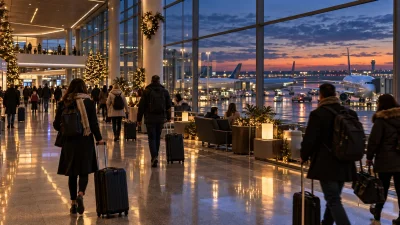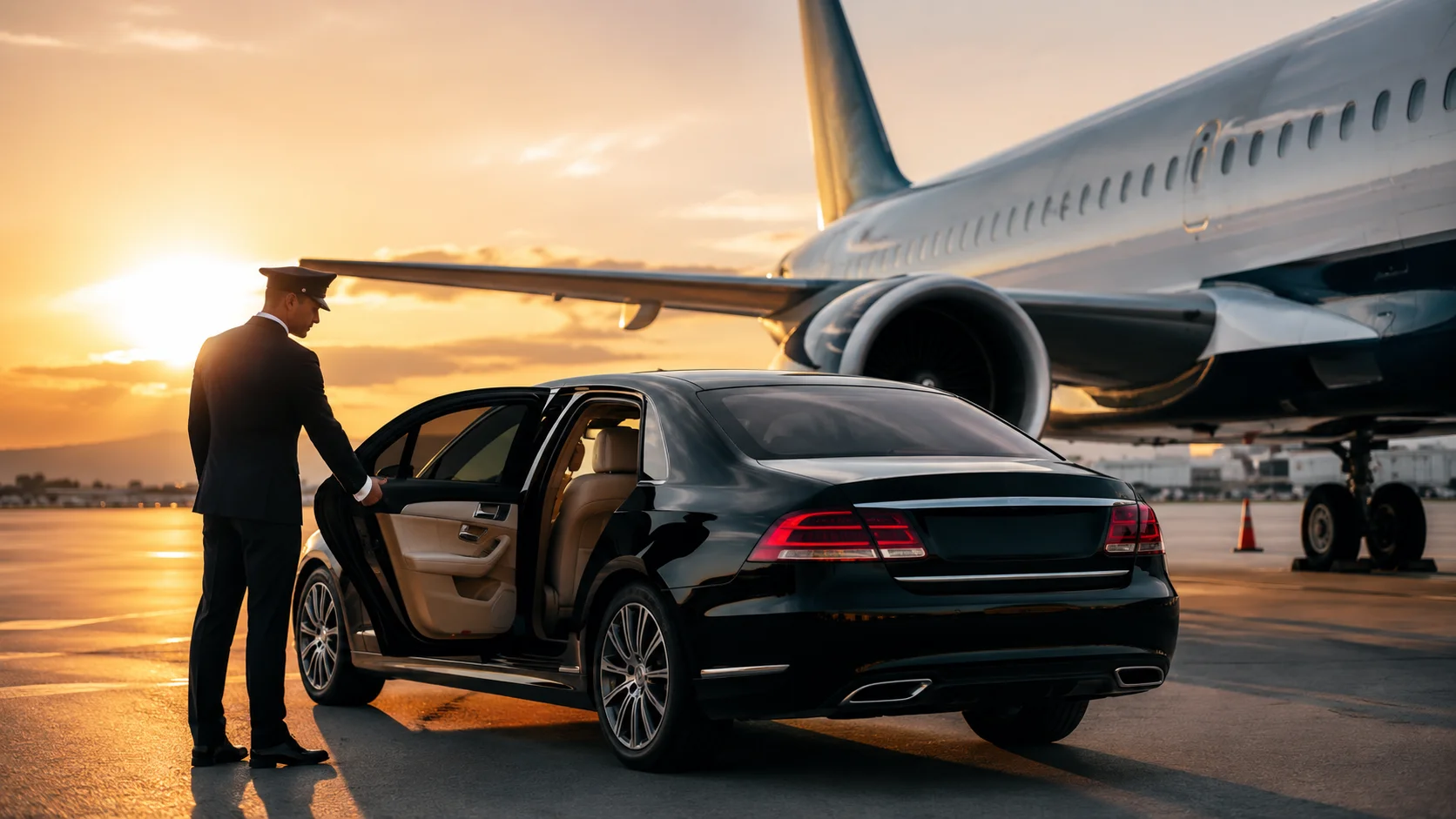
There is a version of flying most Americans will never see. It begins at a discreet gate off the perimeter road, well away from the departures curb, where a guard checks a name against a list and waves a car through. No security line. No jostling at the gate. No boarding-group anxiety. The traveler is walked into a quiet lounge, handed a menu, and eventually driven straight to the aircraft in a waiting sedan. The rest of the plane never knows they were there.
That version is expanding fast. The company behind it, PS, opened two new outposts this summer, and a bidding war for the next one is already underway on the other side of the country. If the last decade of aviation was about squeezing more people into less space, the emerging counter-story is about a small group of flyers paying to vanish from the crowd entirely.
What a private terminal actually is
A private airport terminal is a separate building, on airport grounds, where a traveler checks in, clears security, and waits before being driven across the tarmac to a normal commercial flight. You are still flying United or American or Delta in a standard seat. You are simply skipping every shared step of the airport. PS, formerly branded The Private Suite, has built the most visible version of this in the United States, and in 2026 it went from a curiosity to a small national network.
Two openings in one summer
On June 3, PS opened at Dallas Fort Worth International Airport. Weeks later, on June 30, it opened at Miami International Airport inside a building with real history: the old Pan American Airways headquarters, a structure that once ran the most glamorous name in aviation. The symbolism is hard to miss. The house that helped build mass jet-age travel is now the house that sells an escape from it.
Those two additions bring PS to four locations. It started at Los Angeles in 2017, added Atlanta in 2023, and now holds Dallas and Miami. That is not a coincidence of geography. Those are among the busiest and most connection-heavy hubs in the country, the places where the ordinary airport is at its most punishing.
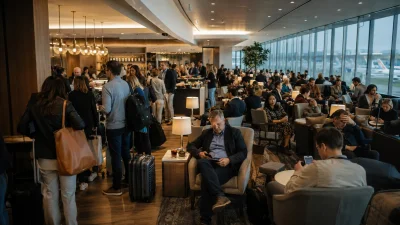
The timing tracks a broader frustration. As we reported in our look at the way the modern lounge got oversold, the premium spaces that used to feel exclusive now often feel like a second waiting room with better snacks. When airport lounge access stops feeling special, the people who can pay more go looking for the next tier. A private terminal is that next tier.
The price of disappearing
None of this is cheap, and PS does not pretend otherwise. A single visit runs about 1,295 dollars per person for a seat in its shared Salon, and roughly 4,950 dollars for a private suite that holds up to four travelers, according to published rates. Annual memberships range from around 1,250 dollars to 4,850 dollars before the per-visit fees. For that, a guest gets private TSA screening conducted away from the main checkpoint, a personal escort, food and drink, and in many cases a spa treatment while they wait.
The final flourish is the ride. Instead of a jet bridge and a crowd, a member is driven to the plane in a BMW, pulling up to the aircraft door minutes before takeoff. It is the part of the pitch that sounds absurd until you have spent an hour in a security line with a delayed flight and a dead phone. This is luxury air travel reframed as time and calm rather than legroom.
Security without the theater
Part of what makes the model work is a quiet shift in how airports handle identity and screening. The same forces we covered in our piece on how AI and biometrics are reshaping the terminal are what let a facility run its own screening lane. As biometric technology spreads across checkpoints, the physical location of a screening matters less than it used to. That makes a premium travel experience built around a separate, calmer checkpoint far easier to operate than it would have been a decade ago.
San Francisco is next, and it is bigger
The clearest sign this is a trend and not a novelty is what is happening in the Bay Area. In early July, San Francisco International moved to solicit bidders for a private terminal of its own, a planned 75,000 square foot facility across the airfield from the public terminals, with a target opening in late 2028. PS attended the bidders conference. When an airport the size of SFO decides it wants one of these, the question stops being whether private terminals are a fad and becomes how many major hubs will have one by the end of the decade.
Why now
The expansion lands in a year when American airports are under unusual strain. With the 2026 World Cup drawing enormous crowds through U.S. hubs, and premium-cabin demand running hot even as airlines fight a fuel-cost spike, the gap between the top of the market and the middle has rarely been wider. Airlines have spent the past two years leaning into pricier seats because that is where the spending is. A private terminal is simply the logical end point of that same demand curve, the place where premium stops being a nicer seat and becomes a different building.
It also arrives as the definition of a hub is shifting. Miami and Dallas are not just busy, they are gateways, Miami toward Latin America and the Caribbean, Dallas across the domestic map and beyond. International connections mean customs, immigration, and the longest, least forgiving lines in the building. A facility with its own immigration and screening lanes is worth the most exactly where the public alternative hurts the most.
What it says about the rest of us
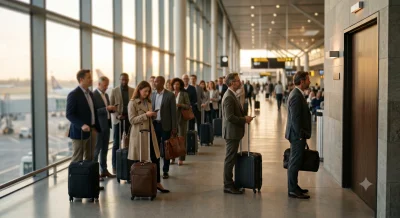
It is tempting to roll your eyes at a 4,950 dollar way to avoid a line, and the eye roll is fair. But the more interesting story is what the growth of the private terminal membership model reveals about ordinary flying. These facilities exist because the standard airport has become something people with money will pay large sums to opt out of. The crowding, the unpredictability, the sense that your time is the airline's to waste. The rich are not buying a better seat. They are buying their way out of the shared experience.
For everyone else, the takeaway is less about envy and more about direction. Amenities that start at the very top tend to drift downward over years, in cheaper and thinner versions. Curbside check-in tied to your face, faster dedicated screening lanes, transport summoned by an app. The private terminal is the extreme edge of a wider bet that the future of the airport is about removing friction, and that plenty of travelers will pay something to remove it. The only real question is how far down the price ladder that promise eventually reaches.
Pan Am's old headquarters reopening as a place to escape the airport is the kind of detail that will read, in a few years, as either a symbol of a gilded moment or the early blueprint for how everyone eventually flies. Right now it is both. The line you stood in this morning is not going anywhere. Neither, increasingly, is the door built to let a few people walk right past it.