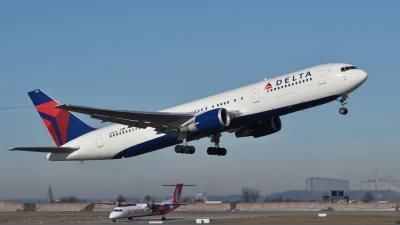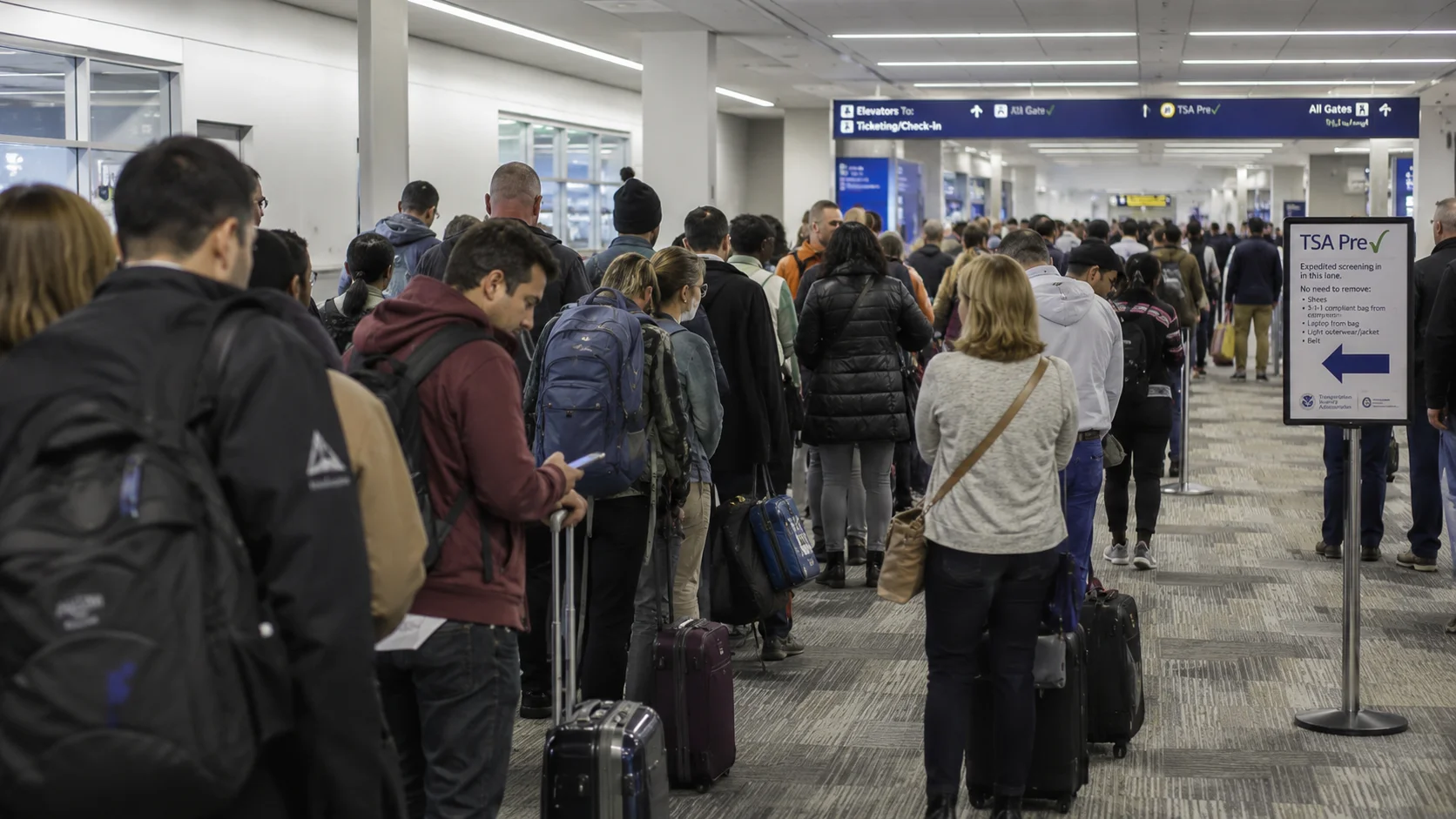
Sunday evening, July 19. Argentina and Spain settle the final question at MetLife Stadium, a bowl built for more than eighty thousand people, and within the hour most of them start moving toward parking lots, NJ Transit platforms, rideshare queues, and eventually, three of the most constrained airports in North America. Nearly six weeks of planning went into getting fans into the New York region for this tournament. Almost none of the coverage has asked the harder question: what happens when everyone tries to leave at once, through an airspace that was already struggling before the first ball was kicked.
The answer is not reassuring, and it is not really about soccer. It is about a regional air traffic system running below its own staffing target, layered under a finals weekend that concentrates demand into a single 48 to 72 hour window. The World Cup did not create that fragility. It is simply the event large enough to expose it.
A Corridor That Was Already Full
Newark Liberty has been operating under a federally ordered flight capacity cap of 72 operations per hour, down from more than 80 before the order took effect, a restriction tied to air traffic control staffing shortages and aging equipment rather than to the tournament itself. That cap runs through October 24, 2026, which means it will still be in force on the Monday and Tuesday after the final, when the outbound crowd is largest. JFK and LaGuardia are working under their own extended capacity orders, and the three airports do not operate independently of one another. They share a single overloaded slice of airspace, so a slowdown that starts at one field routinely bleeds into the other two.
Nationally, the Federal Aviation Administration is short roughly 3,000 air traffic controller staffing positions against its own target, and the New York region is consistently named among the most stretched facilities in the country. That is the baseline the World Cup's closing weekend lands on top of, not a temporary condition created by the tournament. It is worth sitting with that distinction for a moment, because it changes how travelers should read every delay this weekend. A cancellation on July 20 will not be a World Cup problem that resolves itself once the trophy is handed out. It will be the same structural problem the region has been managing all year, simply visible to a much larger audience than usual.
Match Day Doubles as Airspace Day
On July 19 itself, the FAA layers a temporary flight restriction over MetLife Stadium for the match window, part of a restriction schedule that has run continuously since July 9 across the remaining host cities. Flights operating into and out of Newark and nearby Teterboro are the ones most exposed, with ground holds and rerouting possible for the duration of the restriction. Because the region's three commercial airports share sequencing, a slowdown that begins as a stadium-specific rule can still ripple into JFK and LaGuardia schedules that have nothing to do with the match itself.
There is also a less predictable variable. The stadium sits close enough to Bedminster that a presidential visit during the tournament's closing weekend could trigger its own airspace restrictions, layered on top of the World Cup TFR, with general aviation traffic near Newark, LaGuardia, and Morristown affected first. Commercial travelers rarely track presidential movement schedules, and there is no reason they should have to. But it is one more variable stacked onto a weekend that already has little slack left to absorb it, and it is a reminder that the FAA airspace restrictions tied to the match are a floor, not a ceiling, on how complicated the day can get. None of this requires a single mechanical failure or a single canceled flight to matter. It only requires the system to be full, which it already is.
The region did not need a hypothetical to prove the point. Just weeks earlier, weather and staffing gaps forced the FAA to slow arrivals into JFK, LaGuardia, Newark, and Philadelphia simultaneously, producing roughly 500 cancellations and more than 4,000 delays across the affected airports in a single stretch. That was an ordinary summer week, with no tournament and no final pushing extra bodies through the terminals. The final compresses World Cup-scale demand into the same fragile corridor that buckled on its own just days before.
The Exit Math
By the tournament's knockout stage, TSA had already screened more than 18.7 million passengers through the run of matches, a volume concentrated disproportionately around marquee dates. The final is the largest single date left on that calendar, and unlike the tournament's five-week arrival window, the exit compresses into roughly a day and a half. Fans who spread their entry across weeks are trying to leave through the same three runways within one holiday-weekend-sized rush, which is a very different problem than the one the arrivals side solved for.
That mismatch is where a regional airport alternative earns its keep. Stewart, Westchester, and Philadelphia sit outside the New York center's most congested sequencing and have room that Newark, JFK, and LaGuardia do not, even if it means an extra hour on the ground to reach them. NJ Transit's rail line to a station at the stadium door is also worth remembering on the ground side, since it sidesteps the roadway congestion that builds around MetLife on event nights and can be the difference between making a flight and watching its door close from the jet bridge.
What Actually Protects a Traveler This Weekend
Airlines build their schedules around banked hub scheduling, tightly sequenced waves of arrivals and departures designed for predictable summer traffic, not for an irregular surge tied to a single sporting date. That system does not flex well, which is exactly why the practical defenses fall on the traveler rather than the carrier.
Shifting a return flight to Monday or Tuesday rather than Sunday night avoids the single most concentrated exit window. Travelers who cannot move their dates should build a longer connecting flight buffer than usual, particularly on itineraries that route through JFK or Newark, where a single ground stop can cascade into a missed connection two or three flights downstream. It is also worth knowing, and using, the baseline cash refund rule already in federal law: airlines must pay cash, not vouchers, for cancellations and for domestic delays that stretch past three hours, a protection that matters more this particular weekend than most.
There is a reward for flexibility, too. Fares booked three to seven days after the final have consistently run cheaper than departures clustered immediately around it, which makes a short, unplanned extension in New York less an inconvenience than a hedge against the worst of the rush. Secondary regional airports carry the same discount logic, since demand there has never caught up to what is happening at the three main fields.
The Dress Rehearsal
None of the pressure building around July 19 is unique to soccer. It is what happens when a fixed, understaffed system meets a demand spike it cannot expand to meet, and North America has more of these dates ahead of it, not fewer, with the Los Angeles Olympics already on the calendar for 2028. Every mega event between now and then will be graded on the same curve this one is being graded on right now: not whether the stadiums held up, but whether the exit did.
The World Cup's closing weekend is not really a story about a final between Argentina and Spain. It is a preview of how the country's busiest airspace behaves the next time everyone needs to leave the same city at once, and a quiet argument for building more slack into a system that currently has almost none.