There was a period, not long ago, when the aspirational travel flex was a resort. The right island, the right property, the right villa. Status lived in the photograph: a horizon pool, an overwater bungi, a sunrise that required a twelve-hour flight to witness. The destination was the statement.
That era is giving way to something else. Among the affluent travelers shaping luxury travel trends in 2026, the defining trip is no longer built around a place. It is built around an event. The championship weekend, the tournament final, the bracket run across multiple cities, has replaced the resort vacation as the primary expression of high-end travel identity. This is the sportcation. And it is no longer a niche.
Sixty-eight percent of Gen Z and Millennial high-net-worth individuals now anchor their major travel around sporting events, according to research documented by Luxury Travel Magazine in April 2026. That figure is not a rounding error. It represents a decisive pivot in how an entire cohort of wealthy travelers conceive of the trip worth taking.
The macro data supports it. The global sports tourism market was valued at $803.9 billion in 2025 and is projected to reach $927.9 billion in 2026, a growth rate of 16.8 percent annually, making it one of the fastest-expanding segments of the broader travel industry. Luxury travel advisors report waiting lists for championship hospitality packages at events that would have been considered peripheral to the premium travel calendar five years ago.
The shift is partly generational and partly cultural. Younger wealthy travelers, the cohort now accumulating the inherited and earned wealth that drives the luxury segment, grew up with sports as social infrastructure. The game is not incidental to their lives. It is woven into the professional networks, the friendships, the identity markers that define their peer groups. When the championship arrives, the question is not whether to go. It is how to go.
FIFA World Cup 2026: The Inflection Point
No single event has concentrated the attention of the championship travel market in 2026 more than the FIFA World Cup, the first tournament hosted across three nations, with sixteen cities spanning the United States, Canada, and Mexico. The logistical complexity of a multi-city, multi-country tournament of this scale has made it, paradoxically, the most purpose-built event in history for premium aviation.
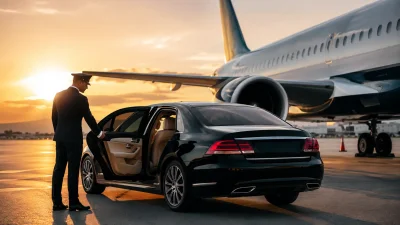
Groups following specific national teams or bracket scenarios need to move between Boston, New York, Miami, Dallas, Los Angeles, Vancouver, and Mexico City across a five-week span. The commercial aviation system, with its fixed schedules and hub dependencies, was not designed for this. Private jet charter operators have reported a 31 percent year-over-year increase in flight requests tied to championship and playoff travel, and the World Cup is the largest single driver of that growth.
Haute Living reported in April 2026 that the pattern of World Cup private jet inquiries is consistent: groups of eight to fourteen, building itineraries around specific matches, with the flexibility to adjust routing as the bracket evolves. The ability to depart on the group's schedule, land at the airport closest to the venue rather than the nearest hub, and fly directly between host cities without a connecting transfer is not a luxury in this context. It is a functional requirement for the experience the traveler has designed.
FIFA World Cup 2026 hospitality packages, managed officially through On Location, offer a pricing range that is wider than most people realize. Single-match hospitality averages around $1,300 per ticket at the entry level. Private suites for a single match begin at approximately $43,200. Full private boxes covering a group of six to twelve across a venue series exceed $100,000.
At the far end of the spectrum, a $4 million package exists. It includes six front-row seats on the halfway line at the final, access to the pitch during the trophy ceremony, and a set of ancillary experiences that transform the match into a multi-day occasion. The number sounds absurd until you consider the social logic: for a segment of the market, what that package buys is not seats but a story that no amount of conventional wealth can produce through a standard booking channel.
The Mark Hotel in Manhattan has structured its World Cup offering around the same logic. Its World Cup Extravaganza occupies the top two floors of the property and moves guests to pitch-side via private helicopter from Manhattan, with 24-hour butler service, caviar service, and a private yacht charter built into the package. The Setai in Miami offers its Champions Experience at $400,000 to $500,000 for five nights: round-trip continental US travel through Setai Aviation, a 3,550 square foot oceanfront suite for up to eight guests, and match access calibrated to the tournament schedule.
These packages are not designed for travelers who are new to premium travel. They are designed for travelers who have exhausted what conventional premium travel offers and are looking for access that cannot be replicated.
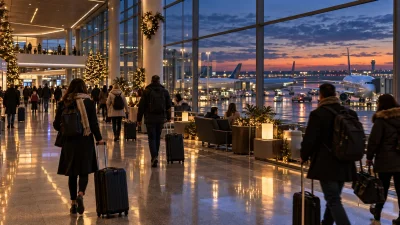
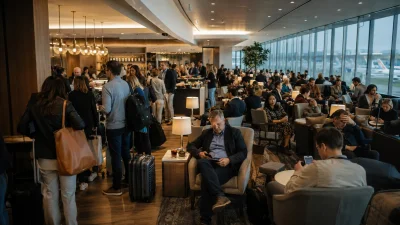
The lounge used to be where the premium traveler waited. It has become, in the sportcation era, one of the primary settings in which the experience unfolds.
American Express Centurion Lounges, ranked the top airport lounge brand globally in 2025 by independent traveler surveys, now operate at 24 locations worldwide with two more expected to open by end of 2026. The Culinary Collective program has elevated food and beverage offerings to a level that competes with urban restaurants rather than airport food courts. The Sidecar cocktail bar concept, recently introduced at select locations, functions as a pre-flight social environment rather than a transit holding area. For travelers moving between World Cup host cities, these properties have become part of the itinerary, not an interruption to it.
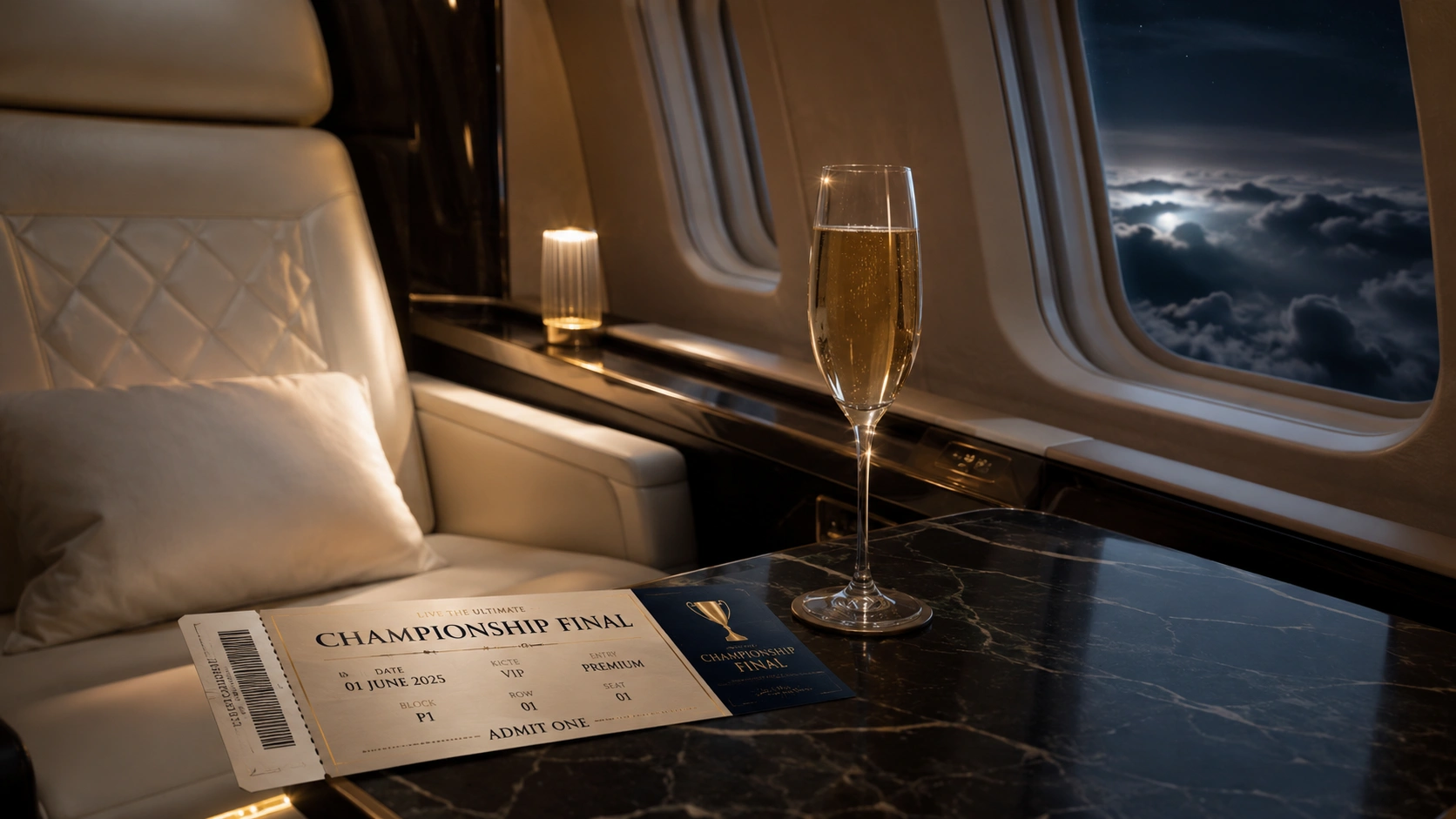
In the cabin, the question of which airline to choose for the international legs of a sportcation itinerary has a cleaner answer than it did a few years ago. Singapore Airlines' A380 First Class Suites, rated World's Best First Class in 2025, offer a six-suite cabin with closing doors and a standalone bed. Emirates' most recent first-class configuration features floor-to-ceiling walls and sliding doors. Etihad's First Apartments include a shower room on select routes. Qatar Airways has effectively retired traditional first class in favor of its Qsuites product, which offers fully enclosed suites with 79-inch lie-flat beds and the option of a four-person shared social configuration.
The travelers building championship itineraries around these cabins are not treating the flight as the preamble. The flight is part of the experience.
The deeper dynamic driving the sportcation trend is not the sport itself. It is access. Major championship weekends have become one of the few environments where the currency of entry is genuinely non-fungible. A suite at the World Cup final, a courtside seat at a Game 7, a front-row position at a championship boxing match: these experiences cannot be manufactured after the fact or simulated at a resort. They existed once, at a specific moment, in a specific place, and either you were there or you were not.
In affluent social networks, that distinction matters. Luxury travel advisors observe that high-end clients are treating championship access the way a previous generation treated trophy properties. It is a form of portfolio building, except the portfolio is experiential and the dividends are social. The story of the trip, told at the dinner table, the board meeting, the group chat, carries a different weight when the anchor event is a championship final rather than a beach.
The sportcation, at its highest expression, is not really about sports. It is about belonging to the group of people who do not need to explain how they got there.
The logistics of a championship weekend built around first-class aviation and premium hospitality are specific. Private jet operators recommend a booking timeline that begins six months out for aircraft selection, with slot applications submitted four months in advance, catering confirmed two months out, and final itineraries locked thirty days before departure. These timelines are not bureaucratic caution. They reflect the actual capacity constraints of the premium aviation market during major events, when demand compresses and the best aircraft and crews are committed early.
Hospitality packages at the championship level follow a similar logic. The packages worth having, the ones with genuine access rather than upgraded seating, move through concierge travel networks and official hospitality channels before they reach the open market. The traveler who engages a specialist six months in advance is working from a different inventory than the one who calls three weeks out.
Luxury sports travel at the level the sportcation now represents is not spontaneous. It is designed. The spontaneity lives inside the experience, once the infrastructure is in place.
The Resort Is Not Going Anywhere
The emergence of the sportcation as a defining luxury travel format does not eliminate the resort. Overwater suites still exist. Horizon pools still photograph well. The island has not lost its appeal.
What has shifted is the hierarchy of aspiration among the travelers who set the reference points for the broader luxury market. For a growing and influential segment, the trip worth talking