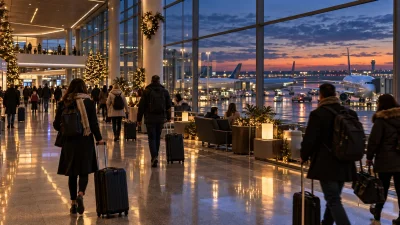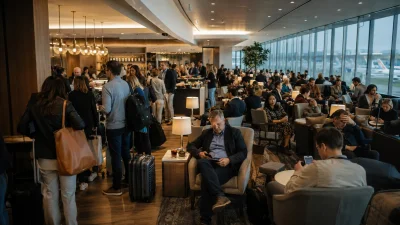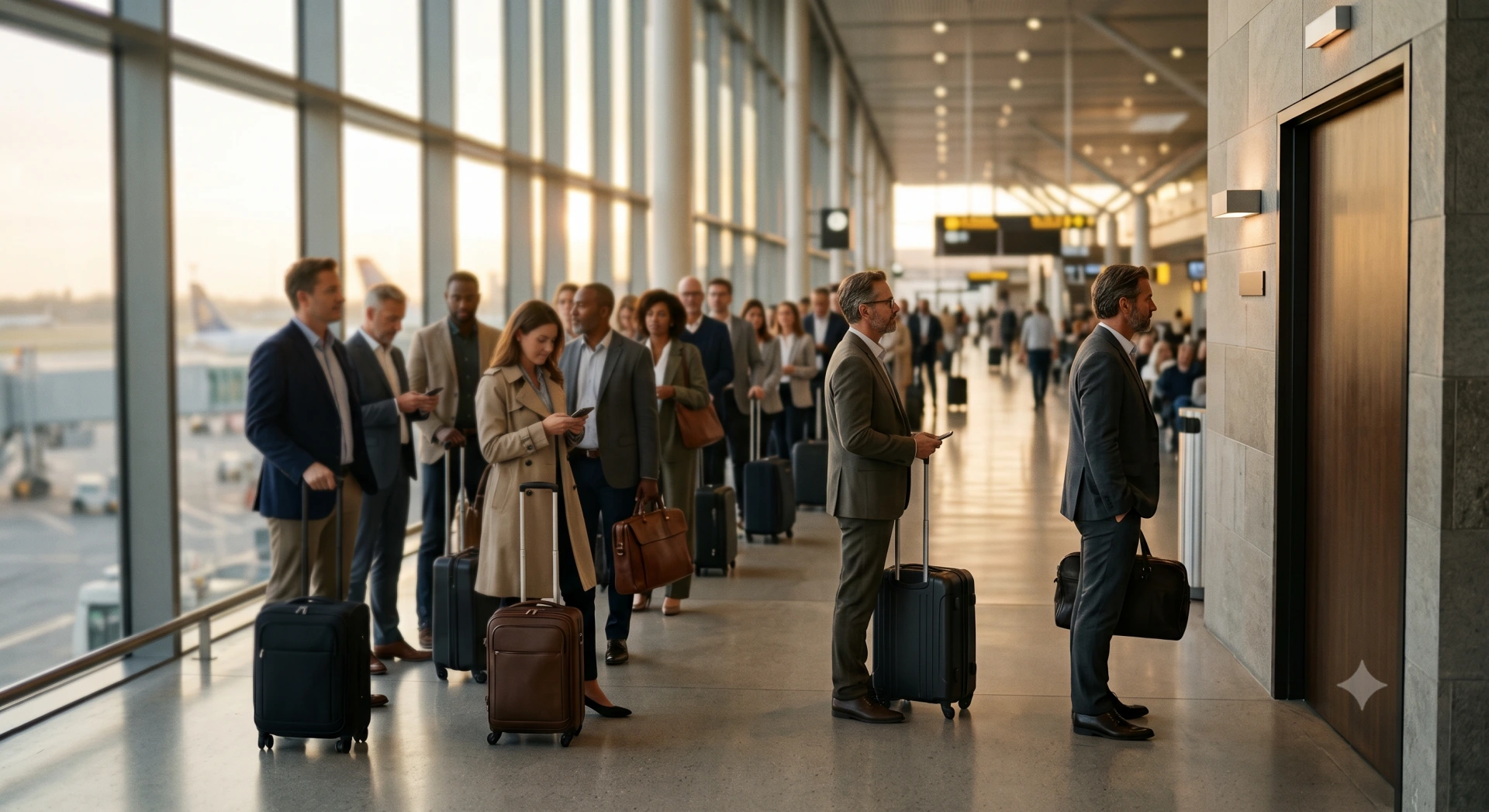
The line at the Amex flagship lounge in Terminal 4 at JFK last month stretched past the elevator, past the Shake Shack, past the crush of travelers wheeling carry-ons toward gate B47. A woman in the middle of it was on hold with American Express. Her guest, she was told, could no longer come in. The guest was traveling on a different flight. That used to be fine. As of July 8, it isn't.
The same-flight rule is one of two changes American Express quietly rolled out at its United States, London Heathrow, Tokyo Haneda, Hong Kong, Sydney, and Melbourne Centurion Lounge locations at the start of the month. The other caps entry during a connection at five hours before the onward departure, closing a loophole that let travelers with long layovers camp all afternoon. Both are being marketed as modest housekeeping. They are, in fact, the latest tremor in a much larger rearrangement of who gets to sit down before a flight.
For a decade, the American premium credit card industry sold the same product four different ways. Amex, Chase, Capital One, and the Priority Pass ecosystem attached to nearly every other travel card in the wallet all promised the same essential thing: a place to escape the terminal. The problem was arithmetic. There is one Amex flagship space at LaGuardia. There are, per Amex disclosures, roughly fifteen million Platinum cardholders in the United States. Chase Sapphire Reserve just crossed its own peak with an annual fee that now runs $795. The Capital One Venture X, priced at a fraction of that, put airport lounge access in reach of a much broader customer than the old airline club membership ever did. The math never worked. It was only a question of when the industry would admit it.
That admission arrived this year in three simultaneous moves, each described by its issuer as reasonable. Amex tightened entry, as of July 8. Capital One, effective February 1, began charging $45 per adult guest and $25 per child at Capital One Lounges and Landings, and started billing $125 a year for each authorized user who wanted lounge access at all. Chase, meanwhile, quietly ended the Ritz-Carlton card's old unlimited-guest privilege at Chase Sapphire Lounge locations and aligned the card with the rest of its portfolio at two complimentary guests, with additional guests at $27 each. None of these are seismic on their own. Read together, they describe a market that has stopped pretending it can serve everyone.
The third-party lounge side of the same story is even blunter. The network of independent lounges that used to sit in the wallet as a fallback has had its restaurant credit stripped out of every mainstream premium card in the American market. Amex went first, in 2019. Capital One followed on the Venture X at the start of 2023. Chase pulled the perk from the Sapphire Reserve, the J.P. Morgan Reserve, and the Ritz-Carlton card on July 1, 2024. The benefit still technically exists, but it is now the province of a handful of niche products most travelers do not carry. That fallback in 2026 is a lounge coupon, nothing more, and often not even that when the lounge is at capacity.
Overcrowding was not the problem. Overpromising was.
Issuers describe the tightening as a response to lounge overcrowding, and it is true that the lines are long. But the crowding is a symptom. The disease is that the lounge, as a category, was sold as a premium good to a mass market. When a benefit is priced at $250 in effective annual value, marketed as exclusive, and then handed out with a card any working professional can qualify for, the exclusivity is a fiction. The move to enforce entry rules and cap layover access does not shrink the audience. It just makes the audience feel the ceiling.
The interesting question is what happens to the mid-tier traveler who was the original customer for these products. That customer flew twelve times a year, held one premium card, and expected to bring a spouse into a lounge without a receipt. In 2026, that customer is being priced out in three different directions. Guest fees at Capital One's own lounges have moved from zero to $45. Authorized user access, previously bundled, now runs $125 per user at Capital One and $195 at Chase. The third-party lounge fallback has been reduced to a stamp of variable quality.
What survives at the top
The counter-story is where the money is actually being spent. Delta's expansion of the Delta One Lounge network at JFK, LAX, Boston, and Seattle has produced a product that resembles an international first-class lounge more than a domestic club. United's Polaris Lounges, open at the airline's major hubs, are gated behind a same-day international business class boarding pass, not a credit card. American's Flagship Lounges at JFK, LAX, Miami, Chicago, and Dallas Fort Worth follow the same model. In each case, the entry mechanic is the ticket, not the wallet. The airlines have quietly reasserted that the highest-quality flagship airline lounges in America belong to the passengers who paid for the ticket that makes them possible.
This tracks with a broader move at the top of the market. The same high-net-worth traveler who is now organizing entire trips around a single sports weekend or event is also the one buying the paid international business class ticket that unlocks a Flagship or Polaris seat. The lounge, in that context, is not a perk of the wallet. It is a feature of the fare. That is a very different product than what a credit card can sell.
This is the bifurcation. On one side sits the mass-market credit card lounge, now tiered by fee and rule until it functions as a pay-to-enter dayroom for the busiest travel days. On the other sits the carrier's flagship product, unbundled from the credit card economy and tethered to a real ticket. The middle, where a mid-tier cardholder could reasonably expect the same experience as a passenger paying $4,000 for a business-class seat, has collapsed. It was always going to.
What to actually do about it
The rational response is to buy the benefit you actually use. A traveler who flies internationally in premium cabins two or three times a year gets more out of a single Polaris or Flagship visit than a full year of the third-party lounge network. A traveler who flies domestically twelve times a year is better off with airline status, which the carriers are now happy to sell through spending thresholds on co-branded cards, than with a general-purpose lounge card whose access rules are moving quarterly. A family that flies together should read the guest math carefully. At Capital One, four seats now cost $180 in guest fees alone before anyone orders a drink.
The airport itself matters more than it used to. A lounge is only as good as the terminal it sits in, and the gap between hubs is widening as fast as the gap between lounges. Frequent travelers should be paying at least as much attention to where they connect as to which card they carry. The best card in the world does not save a two-hour layover in a bad terminal, and the right terminal can make a bad card feel adequate.
The old advice was to hold whichever premium card offered the most lounge coverage. In 2026 the advice is inverted. Hold the card whose lounge fits the trips you actually take, and let the rest go. The lounge industrial complex has finally been forced to admit what its own economics have said for years. The seat was oversold. Someone was going to have to stand.