Every airline in America will tell you they are committed to reliability. The glossy ads promise smooth connections, friendly crews, and bags that actually arrive where you do. But if you want to know what is really happening at 35,000 feet, skip the marketing and go straight to the data. The U.S. Department of Transportation just dropped its most comprehensive airline performance report in years, and the results are genuinely surprising. Airlines you thought were rock-solid are slipping. Carriers you may have underestimated are outperforming. And one major name that spent years building a premium brand around airline reliability is in the middle of a very public unraveling.
Here is the full scorecard, graded straight from DOT data, Wall Street Journal rankings, and the latest real-world reporting from one of the busiest aviation news cycles in recent memory.
2025 Full-Year U.S. Airline Performance Scorecard
Sources: DOT Bureau of Transportation Statistics, Wall Street Journal 2025 Airline Rankings, Cirium Annual On-Time Performance Report. OTP = flights arriving within 15 minutes of scheduled arrival time. *Delta cancellation rate reflects January 2026 DOT data.
| Airline | OTP 2025 | Cancel Rate | Baggage | Complaints | SA Grade |
|---|---|---|---|---|---|
| Allegiant | 75.1% | 0.55% | Best in Industry | Low | A |
| Southwest | 76.4% | 0.84% | 4th Overall | Fewest in Industry | A- |
| Alaska | 77.1% | 1.2% | Strong | Low | B+ |
| United | 78.0% | 1.5% | Poor (7.07/1K) | Mid | B- |
| Delta | 79.7% | 2.45%* | 3rd Overall | Mid | B |
| JetBlue | 73.2% | 1.8% | Average | High | C+ |
| American | 75.9% | 2.2% | Average | High | C |
| Frontier | 71.1% | 1.9% | Average | High | C- |
Allegiant Air: The Quiet Overachiever
Nobody puts Allegiant on their airline power ranking shortlist. The ultra-low-cost carrier does not fly coast to coast. It does not have a fancy loyalty program that makes the finance crowd swoon. But in 2025, when it came to cancellation rate and mishandled baggage, Allegiant beat everyone. Its cancellation rate of just 0.55% was the lowest in the entire industry, and it posted the fewest mishandled bags and the fewest involuntary bumped passengers among all ranked carriers.
The trade-off is on-time performance and extreme delays. Allegiant has said openly that its strategy is to hold flights rather than cancel them outright, which is a passenger-friendly choice but one that drags its punctuality numbers down. If your biggest fear is a cancellation, Allegiant is your safest bet. If making a tight connection is the priority, plan accordingly.
Southwest Airlines: Redemption Story of the Decade
Just a few holiday seasons ago, Southwest Airlines was synonymous with operational chaos. The 2022 Christmas meltdown, which stranded roughly two million passengers and cost the airline over a billion dollars, became a cautionary tale about aging technology and poor system resilience. Few expected Southwest to bounce back as quickly or as decisively as it did.
In 2025, Southwest posted a cancellation rate of just 0.84%, the second-lowest in the industry, and earned the fewest passenger complaints and the fewest tarmac delays of any carrier in the Wall Street Journal's annual ranking. That is not a gradual improvement. That is a complete operational performance turnaround. "It's very easy to cancel a flight. That's the path of least resistance," Southwest COO Andrew Watterson told the Journal. "Keeping cancellations low requires close coordination when disruptions begin to cascade." Southwest's infrastructure investment since the 2022 meltdown is clearly paying dividends, and heading into summer travel season, it is among the most operationally trustworthy options in the sky.
Delta Air Lines: The Fall of the Five-Year Champion
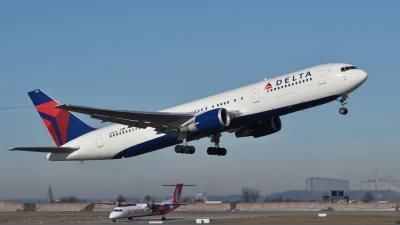
This is the story the aviation industry is talking about right now. Delta held the top spot in U.S. airline reliability for five consecutive years. It was the only American carrier to make Cirium's Top Ten Global Airlines list in 2025. Its marketing team built an entire identity around being "the on-time machine." And then, in a matter of months, the wheels came off.
The DOT's January 2026 Air Travel Consumer Report placed Delta sixth out of nine major carriers in cancellation performance, with a 2.45% cancellation rate that includes a troubling 3.76% rate from its branded codeshare partners. Its on-time performance for all of 2025 sat at 79.7%, still respectable on paper, but no longer leading the pack and trending in the wrong direction.
Why Sustainable Aviation Fuel Is the Industry's Biggest Bet Right Now
Then came the weekend of May 2, 2026, which piled on in dramatic fashion. While rival carriers American and United each logged essentially zero cancellations that Saturday, Delta scrapped 6% of its entire schedule, citing "crew restrictions" that aviation watchers translated as a pilot scheduling breakdown. Delta's on-time performance has dropped from 86% in March 2025 to 79% in March 2026, and more than a third of its cancellations in 2026 are now being attributed to pilot staffing issues, a tenfold increase year over year. Senior VP of flight operations Ryan Gumm acknowledged the problem in a memo to pilots, noting that "recovery performance has been inconsistent." With summer travel arriving and pilot contract negotiations ongoing, Delta's leadership has warned the situation may persist. For a carrier that built its premium pricing on a foundation of reliability, this is more than a bad stretch. It is a brand crisis.
Alaska Airlines: Steady, Underrated, Worth Your Trust
Alaska does not generate the same headlines as the big three, but that is partly the point. In 2025, Alaska maintained one of the lowest cancellation rates in the industry and avoided the kind of major operational meltdowns that defined the year for Delta and American. The Wall Street Journal placed Alaska fourth overall in its composite ranking, and industry analysts have consistently praised the Seattle-based carrier for steady airline reliability across the board.
Alaska is also in the middle of a significant integration following its merger with Hawaiian Airlines, which will expand its network considerably. How it manages that transition through 2026 will be worth watching, but its base operational performance gives it a strong foundation to build from.
United Airlines: Good Enough, Except for Your Bags
United had a mostly solid 2025 from a flight operations standpoint. Its on-time performance came in around 78%, competitive among the legacy carriers, and its cancellation rate was reasonable at 1.5%. Where United falls short in a meaningful way is mishandled baggage. Its rate of 7.07 mishandled bags per 1,000 passengers was well above the industry average, and it remains one of the most consistent complaints from frequent United travelers.
The DOT data is consistent with what any United regular already knows: the flight will probably land close to on time, but the bags are a separate negotiation. United has invested in tracking technology, but that investment has not yet produced better outcomes in the published data.
JetBlue: High Complaint Volume, Real Questions About Stability
JetBlue has consistently ranked among the airlines generating the highest volume of passenger complaints relative to its size. In 2025, it sat near the bottom of reliability metrics with on-time performance of just 73.2% and complaint levels that stand out even in a year when the broader industry saw complaints decline by 23% in the second half.
The airline is in a complicated spot heading into 2026. It is one of the carriers best positioned to benefit from Spirit's collapse, particularly at Fort Lauderdale where it has been expanding aggressively. But absorbing new routes while managing existing operational challenges is a difficult balancing act. JetBlue's Mint transatlantic premium product remains well-regarded, but if airline reliability is the primary concern on domestic routes, there are better options available.
American Airlines: Still Looking for Its Footing
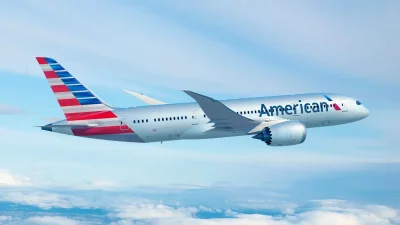
American Airlines has now spent several years near the bottom of domestic carrier rankings, and 2025 did not reverse that trend. Its cancellation rate of 2.2% was the highest among major carriers measured by the Wall Street Journal, and it tied with Frontier for last place overall in the Journal's composite ranking. Passenger complaints remain elevated, and the airline's recovery time from operational disruptions has frustrated travelers consistently.
To be fair, American operates a genuinely difficult network with massive hub exposure in weather-volatile markets like Dallas and Miami. But competitors face similar geographic pressures and manage them more effectively. American's leadership has pointed to ongoing infrastructure investments, but the scorecard tells its own story.
Frontier Airlines: Scrappy but Struggling
Frontier ranked last in four out of seven categories in the Wall Street Journal's 2025 analysis, including on-time performance and extreme flight delays. Its OTP of 71.1% was the worst among major carriers measured, and it has faced formal DOT action for chronic delays, resulting in an amended consent order with financial penalties.
Frontier is now the primary ultra-low-cost carrier standing after Spirit's collapse, and it is moving aggressively to absorb Spirit's former passengers and routes. The carrier reported record adjusted revenue of $1.1 billion in Q1 2026, up 17% year over year. But analysts note that Frontier is still posting losses despite the strong revenue figures, and the same structural economics that made the ultra-low-cost model unsustainable for Spirit remain pressures Frontier must navigate without the cushion of a large credit card program or corporate travel base.
The Bigger Picture: 2025 Was the Worst Year for Reliability Since 2014
It is worth stepping back from the individual carrier grades to acknowledge what the DOT's broader data is telling us. In 2025, more than 100,000 flights were canceled by the largest U.S. operating carriers. Nearly one in four flights, accounting for roughly 1.66 million operations when including flight delays, cancellations, and diversions, did not arrive on time. That is the worst overall on-time performance since 2014. Not a single airline in the Wall Street Journal's rankings cracked the 80% mark for on-time arrivals. The industry average sat at 76.45%.
The reasons are layered. A 43-day government shutdown in early 2025 caused significant disruption at the FAA and DOT, contributing to staffing and certification delays that rippled through operations. The conflict in the Middle East, which began in early 2026, has driven jet fuel costs sharply higher, adding financial pressure that constrains operational flexibility. Pilot shortages continue to affect crew availability across the industry. And infrastructure at many major airports is simply not keeping pace with demand.
What This Means for Your Next Flight
For travelers heading into summer travel season 2026, here is the honest read from the data. If avoiding cancellations is the top priority, Allegiant and Southwest have earned that trust statistically. If you are flying a full-service legacy carrier and airline reliability is the priority, Alaska is the steadiest bet among that group right now. If you book Delta based on its historical premium reputation, understand that reputation is under real operational pressure heading into one of the busiest travel periods of the year. And if you are shopping on price alone in a post-Spirit world, know that fewer options in the budget tier means less competition to keep service levels honest.
Travel insurance is worth more right now than it has been in years. Booking with a credit card that includes trip delay protection adds a meaningful safety net. And checking FlightAware or FlightStats before heading to the airport on any day involving Delta, JetBlue, American, or Frontier is not paranoia. Given where the data stands, it is just good planning.