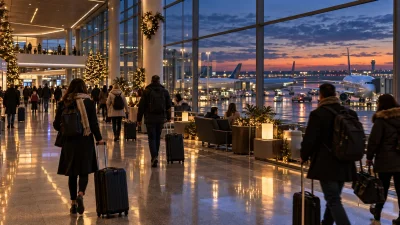
The Sunday after Thanksgiving in 2025, November 30, was the busiest travel day in the Transportation Security Administration’s history. TSA officers screened 3,133,924 people at airport checkpoints nationwide, and many of those travelers were carrying the familiar cargo of the holiday season: bakery-box pies, wrapped presents, homemade jam and bottles of wine packed beside laptops. The Sunday after Thanksgiving in 2026 falls on November 29, and travelers should expect the same checkpoint rules to apply.
Those rules do not loosen for the holidays. Knowing what can go in a carry-on before packing can mean the difference between a quick trip through security and a bag pulled aside while long lines build behind it. Travelers who move most efficiently in late November are usually the ones who pack with screening in mind.
The most counterintuitive rule involves presents. TSA has long advised passengers not to wrap gifts before a flight. In a December 2020 holiday advisory, the agency said officers “recommend that passengers don’t wrap gifts,” explaining that “wrapped items are screened like any other item.” If a package alarms the scanner, an officer may need to open it.
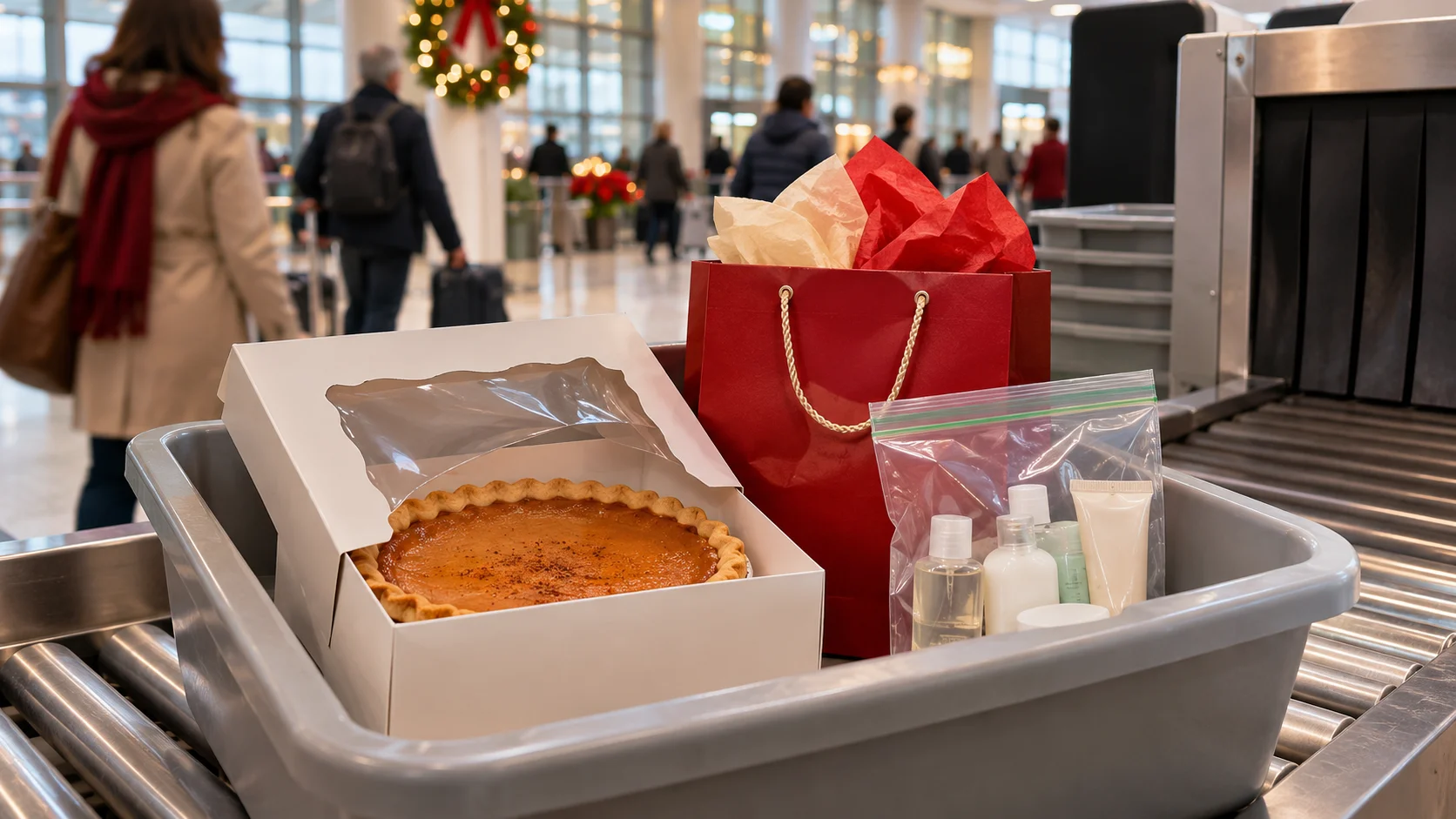
TSA’s workaround is easy: put gifts in a gift bag or gift box, or use a festive bow that can be removed quickly. An open gift bag lets an officer inspect the contents in seconds. Taped paper and ribbon, by contrast, may be torn away at the inspection table, leaving the traveler with a damaged package and a separate bag for the wrapping.
Holiday food and the 3-1-1 liquids rule
Food is where many holiday travelers run into trouble. The 3-1-1 liquids rule limits carry-on liquids, gels and aerosols to containers of 3.4 ounces or less, all packed in one quart-size bag. TSA’s practical test is whether an item can be “spilled, sprayed, spread, pumped or poured.” If so, the size limit generally applies.
Solid foods are usually straightforward, while sauces and spreads can be more complicated. TSA allows baked goods such as cookies, pies and cakes through security checkpoints. A whole pumpkin pie can ride in the cabin, but gravy, cranberry sauce and leftover soup generally belong in checked baggage unless each portion fits within the liquid limit.
Preserves often surprise travelers because a jar of jam seems solid when it is sitting in a pantry. TSA specifically classifies “homemade, store-bought and delicious preserves, jams, jellies and syrups” as liquids. A full-size jar of a relative’s fig preserves should therefore go in a checked suitcase, ideally wrapped in clothing or other protective material.
Snow globes have an especially strict rule. A globe can go through the checkpoint in a carry-on only if it contains less than 3.4 ounces of liquid—roughly the size of a tennis ball—and the entire item, including its base, fits inside the passenger’s quart-size liquids bag. That requirement excludes most decorative snow globes sold in airport and gift shops.
Wine, champagne and other holiday drinks
Wine and champagne should travel in checked baggage under TSA’s holiday guidance. Stronger alcoholic beverages are also subject to Federal Aviation Administration rules. The FAA’s PackSafe guidance permits beverages above 24% and up to 70% alcohol by volume only in “unopened retail packagings,” with a limit of 5 liters total per passenger.
That limit is unlikely to affect someone carrying one bottle of bourbon, but it can matter after a distillery visit or duty-free stop. The unopened-packaging rule also excludes a half-finished bottle from a holiday gathering. Alcohol above 70% by volume, including some grain alcohol and overproof rum, is subject to stricter FAA requirements and is best left at home or sent through a carrier that accepts alcohol.
Checked baggage creates another risk: breakage. A suitcase can be dropped onto a conveyor or placed beneath heavier bags. Travelers who regularly fly with wine often use padded bottle sleeves or place bottles in the center of a suitcase, surrounded by clothing. A sealed plastic bag around each bottle can also prevent a broken bottle from soaking the rest of the luggage.
Eggnog presents the same basic issue as other liquid holiday drinks. The December 2020 TSA advisory listed eggnog alongside wine and champagne as a beverage that should be checked, a useful reminder that festive drinks are still liquids at the checkpoint.
Check identification before heading to the airport
Identification is another detail that occasional travelers can overlook. Since REAL ID enforcement began, passengers have needed either a REAL ID-compliant license or another accepted document, such as a passport, to fly. Travelers without an accepted ID can still seek identity verification, but since February 1, 2026, TSA has directed them to its ConfirmID process, which carries a $45 identity verification fee for a 10-day travel period.
TSA has urged travelers who need ConfirmID to pay online before arriving at the airport. A passenger who flies only once a year and has not checked a license’s status is especially likely to discover the problem at the checkpoint. Confirming the document requirements a week before departure can prevent a fee, extra screening and a possible missed boarding time.
SA Alliance Air covered the broader checkpoint changes in its November 15 guide to TSA Touchless ID and how to opt out of airport face scans, including the additional time that ConfirmID may require. Travelers should also remember that they can ask about opting out of facial recognition where the process is available.
Plan around the busiest Thanksgiving travel days
Flight timing matters as much as packing. The record crowd in 2025 came on the Sunday after Thanksgiving, rather than on the Wednesday before the holiday. In 2026, travelers with flexible schedules may be able to avoid the heaviest return traffic by flying on Saturday, November 28, or Monday, November 30, instead of Sunday, November 29. SA Alliance Air’s guide to when to book Thanksgiving and Christmas flights explains how fares and available seats can shift around peak dates.
Gifts that are fragile, liquid or unusually heavy may be better shipped ahead, particularly for travelers planning to use only a carry-on and avoid checked-bag fees. A package sent by ground during the week before Thanksgiving may arrive before the traveler and removes the question of whether a jar of preserves or a bottle of wine will survive the baggage system.
For gifts that do travel in the cabin, keep them easy to inspect. Place an open gift bag on top of a jacket or other soft items in a separate bin so an officer can resolve a question without unpacking the entire carry-on. A little preparation can keep a holiday checkpoint delay from becoming the first unwelcome surprise of the trip.