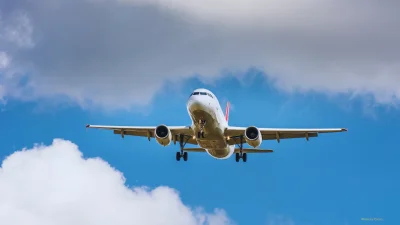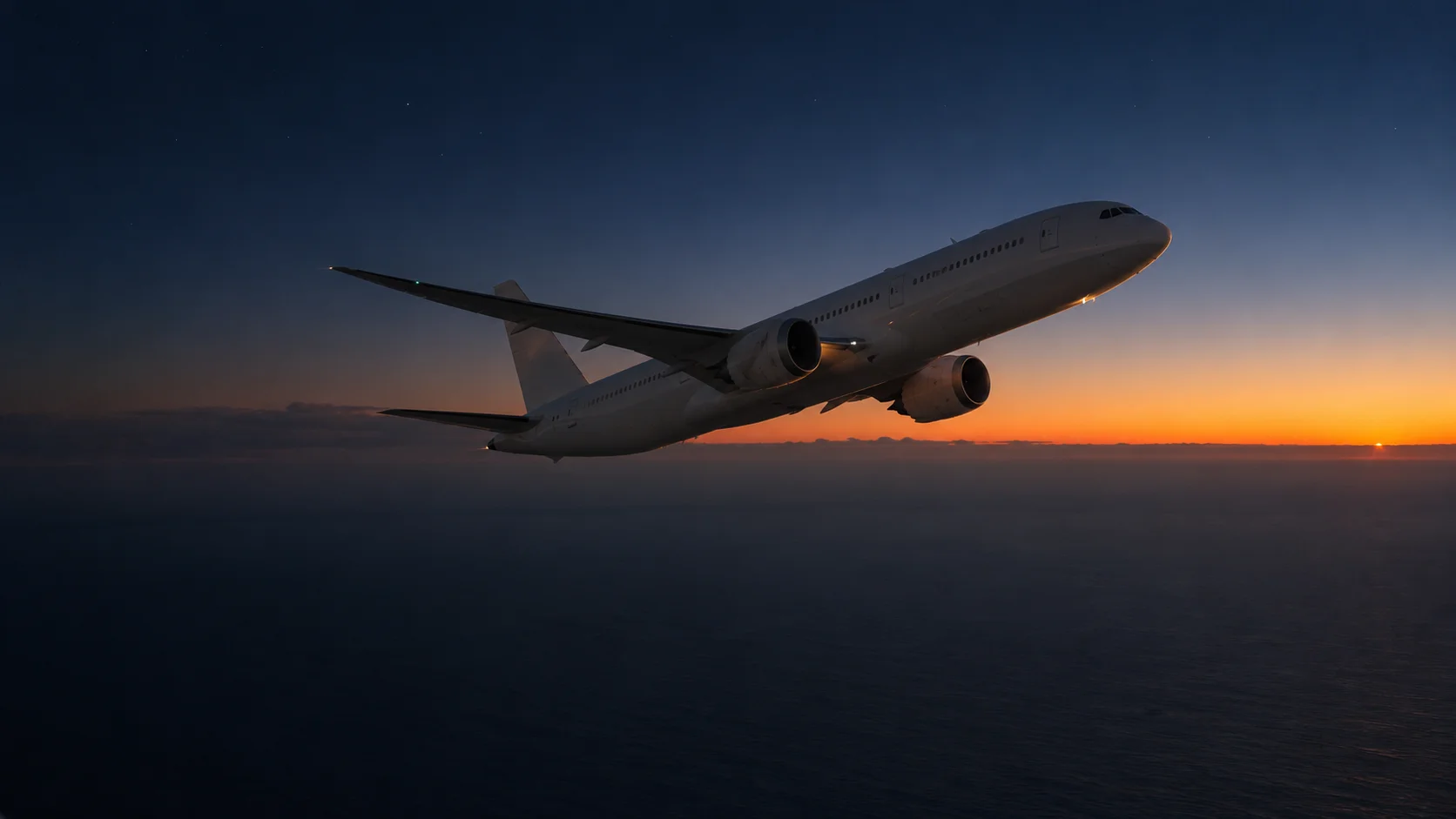
Late in July, an Airbus A350 took off from Toulouse carrying flight test engineers, a rotating roster of pilots and a fuel tank that no other passenger jet in service has ever carried. It flew to Melbourne, then on to Los Angeles, then home to France, covering 12,460 nautical miles in 24 hours and 24 minutes between July 23 and July 28. When it landed, Qantas had the data it needed to sell the longest scheduled flights in commercial history.
The aircraft is the A350-1000ULR, the centerpiece of what Qantas calls Project Sunrise, and its promise for American travelers is specific. Qantas says nonstop flights between Sydney and New York will begin from mid-2028, with tickets going on sale from August 2027, and the carrier describes the new routes as cutting up to four hours from today's one-stop journeys.
The flights that come first will connect Sydney and London, daily, from October 2027, with tickets for those routes going on sale in February 2027. On Qantas's published timeline, New York follows London by less than a year. What follows is a look at how the airplane was built to fly for most of a day and what its cabin looks like. It also explains why one Australian program has become a test case for premium long-haul travel.
An Airliner Designed Around a Fuel Tank
The A350-1000ULR is built for routes of almost 10,000 nautical miles with flight times of up to 22 hours. The change that makes that possible is a rear center fuel tank that the manufacturer says adds about 1,000 nautical miles of range. Airbus and Qantas have described its capacity as roughly 20,000 liters, with one Airbus account putting it at 20,900.
The ULR variant also carries a higher maximum takeoff weight than the standard A350-1000, and it is powered by the same Rolls-Royce Trent XWB-97 engines. Smaller engineering choices add up as well. A redesigned galley air-cooling system saves around 300 kilograms and, according to Airbus, will become standard across the A350 family, so a technology developed for one niche order will eventually fly far shorter routes.
The first test airframe, MSN 707, made its maiden flight from Toulouse in early June, staying aloft for 3 hours and 43 minutes and climbing slightly above 41,000 feet. Airbus dated the flight to June 2. That airplane is a test vehicle, and the first aircraft Qantas will receive, named Vega, is scheduled for delivery in April 2027 after slipping from an earlier late-2026 target.
What 24 Hours in the Air Proved
Airbus says the mission demonstrated a 23-hour block time to cover the 21 hours and 40 minutes of flight time Qantas intends to schedule, and it gave engineers a long continuous run of systems data before certification.
Two Qantas captains, Andrew Coull and David Summergreene, flew the return leg alongside the Airbus crew, and the fatigue planning on board offered an early preview of how airline crews will work these routes. "To manage fatigue during the 20 to 23-hour flights we implemented four-hour shifts for each pilot," said Xavier Pepin, an Airbus test pilot, in the manufacturer's account of the flight, which notes that pilots also rotated every two hours.
Pepin described the exchange with the airline's pilots warmly. "We really enjoyed and appreciated exchanging knowledge and addressing their questions during our ultra-long-range voyage," he said, and the full Airbus account of the development flight traces the route leg by leg. Qantas has said the test program as a whole ran to about 80 flight hours over two months.
A Cabin Built for the Body, Not Just the Seat Count
Qantas has configured the aircraft with 238 seats, a deliberately low count for an airplane this size. The airline's A350 fleet page lists six First suites, 52 Business seats, 40 Premium Economy seats and 140 Economy seats, of which 42 are Economy Plus at 34 inches of pitch.
The rest of Economy gets 33 inches of pitch across more than 70 percent of that cabin. Between Premium Economy and Economy sits a Wellbeing Zone, a dedicated space where passengers can leave their seats on a flight long enough that sitting still for its entire length becomes a health consideration rather than an inconvenience.
Wi-Fi will be free in every cabin. Our recent look at how free inflight Wi-Fi is spreading across airlines covered the connectivity race closer to home. On a flight approaching 20 hours, a working connection becomes part of the product as much as the seat itself.
Why the Economics Point Toward Premium
A 238-seat airplane flying a full day needs high-yield passengers to work, and Qantas's most recent annual results suggest that demand exists. In its fiscal 2026 results released August 27, the group reported international premium cabin revenue up 15 percent. Underlying profit before tax came in at A$2.06 billion, down A$330 million after a net A$420 million hit attributed to the conflict in the Middle East.
The same release set out the fleet transition around the program. Qantas plans to phase out its A380s gradually from calendar 2028, forecasts fiscal 2027 capital expenditure of A$4.3 billion to A$4.6 billion, and has ordered 12 A350-1000ULRs alongside 12 standard A350-1000s.
"With our first Project Sunrise A350-1000ULR to arrive in April, and more A350s and 787s on the way, it's a new era for Qantas' international fleet with these next generation aircraft set to transform the way our customers travel," said Vanessa Hudson, the group's chief executive, in the results release.
What It Means for Travelers in the United States
For travelers on the East Coast, Australia currently means a connection, usually through the West Coast or another Pacific gateway. A nonstop from New York removes that step. The up to four hours Qantas says it will save come from time on the ground and a second climb and descent, not from any speed advantage in the air.
The partnership structure matters too. Qantas and American Airlines operate a joint business on Pacific routes that the U.S. Department of Transportation approved with antitrust immunity in July 2019, allowing the two carriers to coordinate schedules and pricing. Our earlier reporting on how antitrust immunity shapes alliances explains why that approval shapes pricing and scheduling more than alliance membership alone.
Several details remain unsettled. Qantas notes that every date is subject to regulatory approval and certification, the New York schedule has not been published in the airline's own fleet materials, and fares have not been released. Travelers who want to be on the first flights should watch for the August 2027 sale date rather than any earlier announcement.
A Test Case for the Next Generation of Long-Haul
Project Sunrise rests on three bets placed at once. The first is that a twin-engine airplane can fly for nearly a day with margins acceptable to regulators. The second is that crews can be rostered safely across 20-plus hours, and the third is that enough passengers will pay a premium to skip a connection.
The July flight answered most of the first question, and Qantas's crew-rest planning with Airbus addresses the second. The third will be measured in bookings, beginning with Sydney and London in October 2027 and New York the following year, when Vega and its sister aircraft begin flying routes that until now required at least one stop.