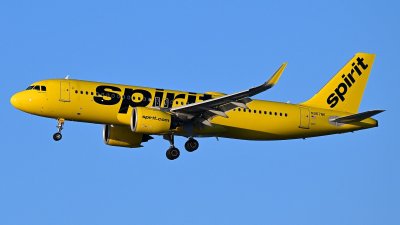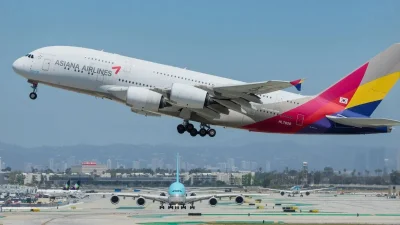
Three airlines changed alliance in 2026, and the industry treated each as news. ITA Airways joined Star Alliance on April 1 as its 26th member, fourteen months after leaving SkyTeam. Hawaiian Airlines joined oneworld on April 23, becoming its sixteenth member and its third based in the United States. Asiana Airlines will leave Star Alliance on December 16, the day before Korean Air absorbs it.
None of those three events changes what a passenger pays. Alliance membership buys reciprocal lounge access, shared loyalty earning and a coordinated check-in desk, and it stops well short of letting two carriers agree on a fare. The decision with real commercial force this year came from the Eleventh Circuit Court of Appeals on 20 August, when a three-judge panel vacated the Department of Transportation order that would have stripped Delta and Aeromexico of their antitrust immunity.
Understanding why that ruling outranks three alliance ceremonies means understanding the difference between a logo on a fuselage and a grant of immunity from federal antitrust law. Airline antitrust immunity is the mechanism that lets competing carriers behave, on specific routes, as a single commercial entity, and it is the layer where alliance strategy either earns money or does not.
What Immunity Buys That a Logo Does Not
The Government Accountability Office drew the distinction cleanly in a 2019 report. A codeshare is a voluntary commercial agreement placing one carrier's marketing code on another's flight. An alliance links route networks and coordinates specified activities such as marketing and sales. An immunized joint venture goes considerably further, permitting carriers to coordinate on fares, schedules and shared-network expansion in ways that might otherwise violate United States antitrust laws.
The operative phrase in GAO-19-237 is the one about money. Immunized partners share revenues across their flights regardless of which carrier operates the flight, an arrangement the industry calls metal neutrality, and they jointly coordinate schedules, prices and sales. Once a carrier no longer cares whose aircraft flies a passenger, the incentive to undercut a partner on a shared route disappears, which is precisely the competitive concern that makes immunity a matter for federal approval under 49 U.S.C. 41308 and 41309.
GAO reported that immunized carriers across the three global alliances provided approximately 75 percent of available seats on transatlantic flights between the United States and Europe, a figure drawn from 2017 data and now nine years old. As of November 2018 the department had granted immunity 31 times with 23 grants in effect, and DOT's own list, dated 4 November 2025, shows 13 active immunized alliances.
The Order That Never Took Effect
DOT issued Order 2025-9-8 on 15 September 2025, terminating its approval of the Delta and Aeromexico joint venture along with the associated grant of immunity, effective 1 January 2026. The order rested on conditions at Mexico City Benito Juarez International, where the Mexican government had reallocated slots and cut hourly operations, and where DOT found the joint venture partners held approximately 60 percent of slots at what it called the fourth-largest gateway to the United States.
The airlines went to court and the Eleventh Circuit stayed the order on November 12, 2025, seven weeks before it would have bitten. Coverage that describes the joint venture as having been unwound and later restored has the sequence wrong: joint pricing and scheduling continued without interruption throughout, and the January 1, 2026 termination date passed with nothing happening.
On August 20, 2026 the panel vacated the order outright. The disposition ran to a single word, and it did not include a remand, which leaves no live proceeding at DOT to correct the defects the court identified.
Two Grounds, Both About Consistency
Writing for a panel that also included Judges Rosenbaum and Tjoflat, Judge Branch found the order arbitrary and capricious on two independent grounds, and both concerned how the department treated its own precedent rather than what it concluded about Mexico City.
Here, when reassessing the joint venture in 2025, DOT abruptly departed from its uniform precedent of comprehensively analyzing all of the relevant markets and instead relied on its finding that there were anticompetitive conditions at MEX, a single airport.
The 2016 order granting immunity had evaluated competition in the United States and Mexico market across 1,687 city-pair markets. The 2025 order analyzed none of them. That is the first ground, and the arithmetic of it is stark given that Mexico City accounts for 21 percent of traffic and flights between the two countries, leaving 79 percent unexamined in the order that proposed to dismantle the venture serving it.
DOT did not treat like cases alike because it held the petitioners to a higher standard for approval than the Japanese joint venture applicants when it made compliance with an open skies agreement at MEX necessary for approval in this case but approved two Japanese joint ventures despite the lack of an open skies agreement that included Haneda.
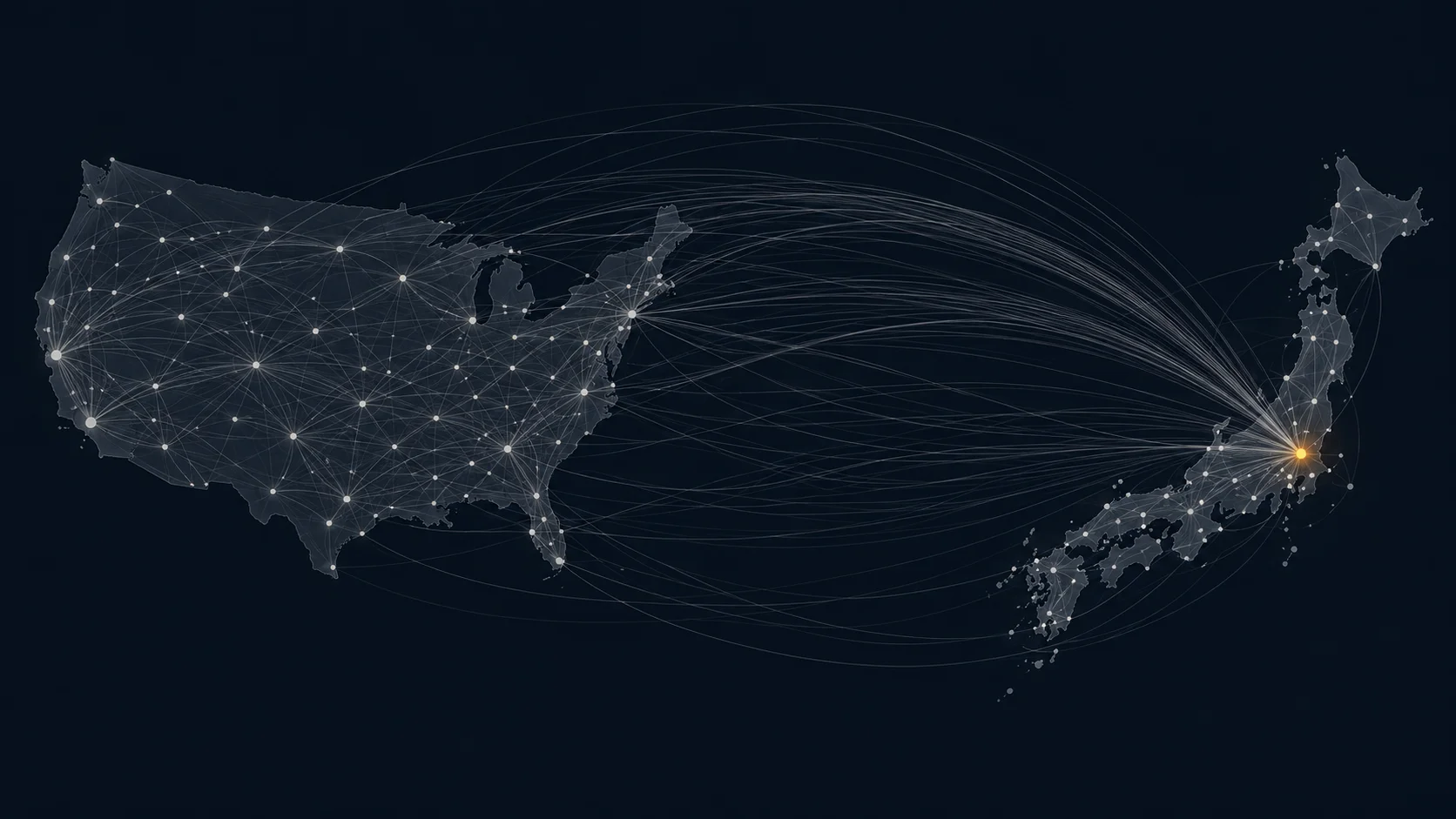
That is the second ground, and it is the one with the longer reach. The 2009 United States and Japan open skies agreement carved Haneda out, prohibiting all-cargo service there and limiting American carriers to 18 daily slot-pairs, and DOT immunized two transpacific joint ventures at that airport regardless. Having done so, the court held, the department could not make open skies compliance at Mexico City a precondition for a different set of applicants. The opinion cites Westar Energy for the proposition that agencies must treat like cases alike, and FCC v. Prometheus Radio Project for the requirement that agency action be reasonable and reasonably explained.
Delta and Aeromexico have announced no service changes since the ruling. Aeromexico said on the day it was reviewing the court's opinion and potential next steps with Delta and its legal advisors, and DOT said it would consider all available legal options. The department's window to seek panel rehearing or rehearing en banc runs into early October, and as of publication no filing had appeared on the docket.
The Badge Moves First, the Economics Follow
Set the ruling beside this year's three alliance changes and the hierarchy becomes visible. ITA Airways left SkyTeam on February 3, 2025, seventeen days after Lufthansa Group closed its 41 percent stake through a 325 million euro capital increase, and spent fourteen months unaligned before joining Star Alliance with more than 350 daily flights and over 16 million annual passengers. The membership gives ITA passengers reciprocal status recognition across 25 other carriers.
What it does not give ITA is a share of United's transatlantic revenue. That requires joining A++, the immunized joint venture linking Air Canada, Lufthansa Group and United under Order 2009-7-10, and the three carriers filed with DOT on October 1, 2025 seeking exactly that. Trade coverage of the filing reports the carriers arguing that including ITA within the existing grant would generate significant consumer benefits while maintaining robust competition across the Atlantic. No departmental decision on that application had been confirmed as of this writing, and it is the filing to watch rather than the Rome ceremony.
Hawaiian's arrival at oneworld follows the same pattern inside Alaska Air Group. Ole Orver, oneworld's chief executive, said the alliance was delighted to officially welcome Hawaiian Airlines into the oneworld family, further strengthening its footprint in the Pacific region and the United States. Diana Birkett Rakow, who leads Hawaiian as executive vice president of Alaska Air Group, framed the accession around joining an extended ohana of the world's best airlines. Neither statement mentions revenue sharing, because that is not what membership confers.
Asiana's departure is the counterweight, and its mechanics are worth reading precisely. The carrier's own customer notice states that Star Alliance membership is maintained until December 16, 2026, the day before integration into Korean Air, with Star Alliance Gold converting to SkyTeam Elite Plus. Star Alliance gains a European flag carrier in April and loses a major Northeast Asian member in December, inside one calendar year.
What This Changes for the Next Application
The practical consequence of the August ruling reaches past one bilateral dispute. DOT had been using the threat of immunity withdrawal as leverage in a negotiation with the Mexican government over slot allocation and cargo operations at Mexico City, and the court has now told the department that if it wants to revoke immunity it must analyze the markets it analyzed when granting it, and apply the same standard it applied to comparable applicants elsewhere. That raises the evidentiary cost of using immunity as a diplomatic instrument.
For travelers the near-term picture is unchanged. Delta and Aeromexico continue to coordinate schedules and fares across a network where the joint venture lifted Aeromexico's share of nonstop traffic between the United States and Mexico City from 44 percent before implementation to 76 percent after, and Delta's from 28 percent to 51 percent, figures drawn from DOT's own order. Whether that concentration is good for fares is the question DOT raised and then failed to support in the manner its own precedent required.
The longer arc runs through the A++ application and any immunity request that follows it. Alliance membership will keep generating announcements, lounge access and status matches, and the readers who track those already know that loyalty programs now earn on spend rather than distance. The filings that decide who sets the price on a given route rarely come with a ceremony at all, which is why DOT's docket is a better forward indicator than any alliance's press room, a lesson that also applies to how Washington handles fee disclosure.