The regulation at the center of this has been sitting in the Code of Federal Regulations since September 15, 1992, filed under Docket 26142. It runs to a handful of sentences about trays, carts, movie screens, and drinks, and for most of three decades the first of those sentences was read one way at the gate and a slightly different way in the galley.
Paragraph (a) of 14 CFR 121.577 says: No certificate holder may move an airplane on the surface, take off, or land when any food, beverage, or tableware furnished by the certificate holder is located at any passenger seat.
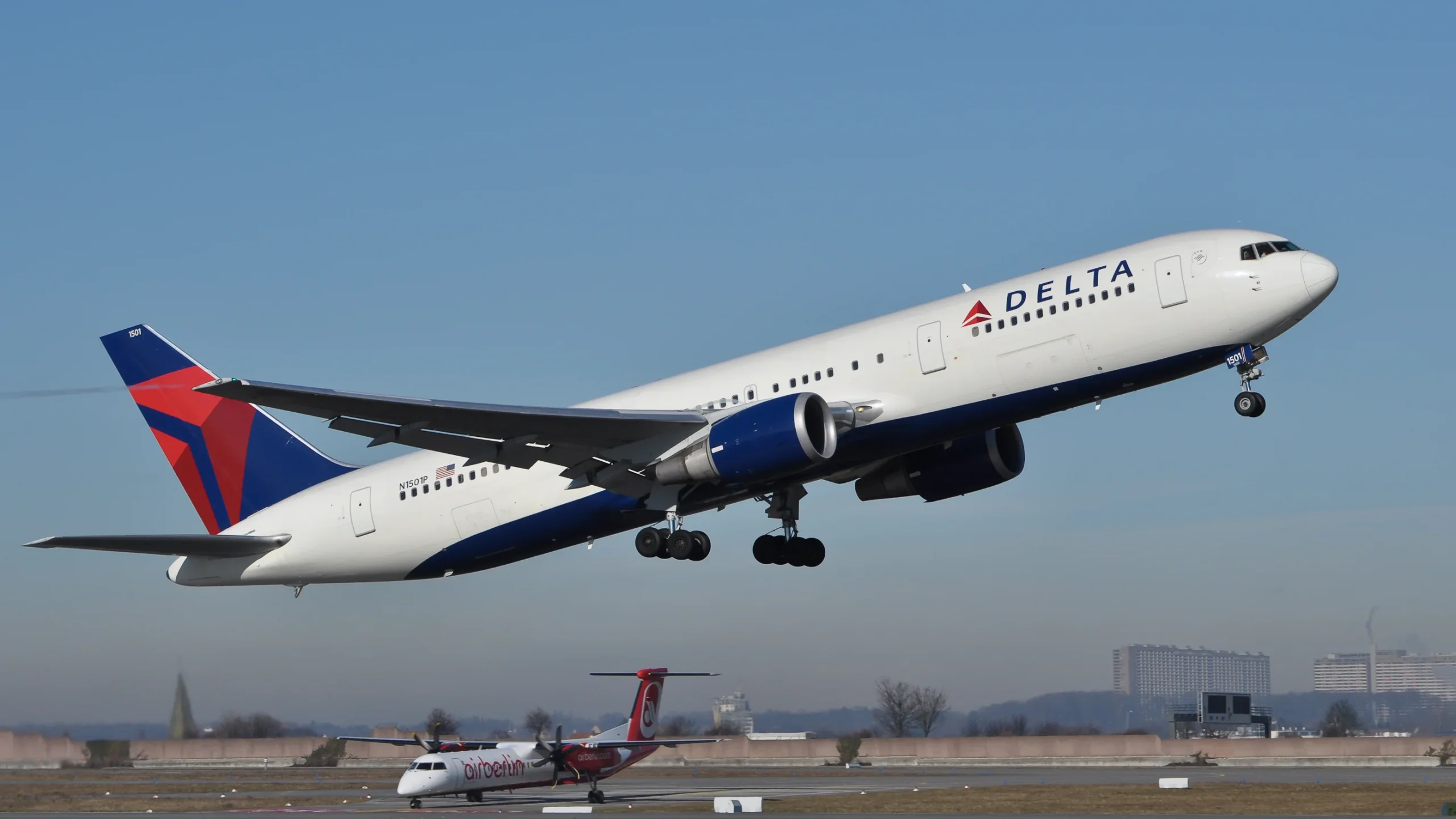
Beginning Tuesday, Delta crews are to enforce that sentence to the letter. An internal memo, reported by One Mile at a Time, instructs that from September 1, flight attendants will be required to collect all Delta-provided service items, including both disposable and non-disposable service items, before pushback. The memo describes the change as FAA-driven.
What Changed, and What Did Not
The rule text has not moved a comma. What is reported to have moved is the agency's interpretive guidance, revised on May 27, 2026, which removes the working distinction between a glass tumbler and a paper cup. Under the older reading, disposable serviceware was treated as outside the spirit of a stowage rule written around heavy trays and metal carts. Under the newer reading, a plastic cup with orange juice in it is a beverage furnished by the certificate holder, sitting at a passenger seat, while the airplane moves on the surface.
A caveat belongs here rather than in a footnote. The FAA guidance document itself is not retrievable in a form we could independently verify, because the agency's dynamic regulatory system does not render to outside requests, and the May 27 revision date comes from aviation trade reporting rather than from the agency's own published page. The regulation is verifiable, and we have quoted it in full above from the electronic Code of Federal Regulations. The guidance layered on top of it is, at this writing, sourced to reporting.
Delta's own instruction to crews is the firmer fact, and it carries an operational tell. The memo advises that on flights offering pre-departure beverages in disposable serviceware, customers may have less time with their beverages before collection, and asks crews to consider opportunities to begin service earlier in the boarding process where possible.
The Four Words That Build the Loophole
Read paragraph (a) again and stop at "furnished by the certificate holder." The certificate holder is the airline. The rule reaches food, beverage, and tableware that the airline handed you, and it reaches nothing else.
A latte bought at the terminal kiosk was not furnished by the certificate holder. Neither was the bottle of water from the newsstand, nor the smoothie carried aboard in a cup with a competitor's logo on it. Under the plain text, those items may sit at a passenger seat while the aircraft pushes back, taxis, and takes off, provided nothing else in the cabin rules says otherwise.
The result is a cabin where the passenger in seat 2A must surrender a company glass of sparkling wine at the door while the passenger in 2B keeps a sixteen-ounce iced coffee through the entire taxi. Both cups are made of roughly the same plastic and would behave identically in a rejected takeoff. Only one of them is regulated.
Why the Rule Exists at All
The rest of 121.577 explains the logic better than the beverage paragraph does. The section also requires that every food and beverage tray and seat back tray table be secured in its stowed position, that each passenger serving cart be secured in its stowage compartment, and that any movie screen extending into an aisle be stowed, all before the airplane moves on the surface, takes off, or lands.
Read as a set, those requirements describe one concern rather than four. Ground movement and the moments either side of it are when an aircraft is most likely to stop abruptly or to need an aisle cleared in seconds, and every item on that list is either loose mass or an obstruction. A serving cart weighs enough to matter in a rejected takeoff, and a screen in the aisle is a problem during an evacuation regardless of what it weighs.
A paper cup of orange juice fits that framework awkwardly, which is why the working exception survived for so long. The counterargument, and it is not a frivolous one, is that a regulation cannot be enforced selectively by weight without inviting an argument about where the line sits, and a cabin crew has neither the time nor the authority to run that calculation at the door.
What It Means for the Front Cabin
The pre-departure beverage has been one of the more reliable signals of premium service in the United States market, partly because it is offered at the moment a passenger is deciding whether the upgrade was worth it. Delta has been more consistent about serving it than several of its peers, which means Delta is also the carrier with the most to lose from compressing the window.
Compression is the actual effect. Under current practice, crews collect cups during taxi, timed to the flight deck's final cabin announcement, which gives a passenger boarding early perhaps twenty minutes with a drink. Moving collection to before pushback removes the taxi portion entirely, and at a hub like Atlanta or Detroit the taxi portion can be the longer half.
Delta's instruction to start service earlier in boarding is the mitigation, and it puts pressure on a cabin crew already managing bags, seat swaps, and the boarding door. Whether the drink still arrives on a full transcontinental flight where boarding runs late is a scheduling question, not a regulatory one, and it will be answered differently on different aircraft.
What We Are Not Reporting
Several outlets have described this as an industry-wide adoption already underway at multiple carriers. The sourcing for that claim traces to social media posts and forum threads rather than to airline statements or crew bulletins, so we are not naming other carriers here. The memo language is specific to one airline, and the interpretive guidance, if it exists as described, applies to every Part 121 operator whether or not any given airline has yet told its crews.
That distinction matters for a traveler planning September. A rule change that binds an entire industry and a policy change announced by one airline produce identical experiences on a Delta flight and completely different expectations everywhere else.
How to Play It
If the drink matters to you, board early and accept it early. On a flight with group boarding, the passenger who reaches the seat in the first wave has the widest window, and the passenger who arrives at the tail end of boarding may find the tray already going back to the galley.
If the drink matters to you more than that, buy it landside. A terminal purchase sits outside the regulation's reach and travels with you through pushback and takeoff, which is a strange thing to be able to write about a safety rule, and is nevertheless what the text says.
And if a crew member asks for the glass while the jet bridge is still attached, the request is not discretionary and not a service failure. It is a flight attendant complying with a stowage rule that has been on the books since the year the Boeing 777 was still two years from its first flight. What is new is only that somebody upstairs reread it.
We track the gap between what carriers advertise and what the operating manual actually requires, from the disclosures that never make the fare page to the pricing rules Washington quietly rolled back this year. This one is unusual in that the airline is not the party narrowing the benefit. The FAA stowage rule did that in 1992, and nobody enforced it.