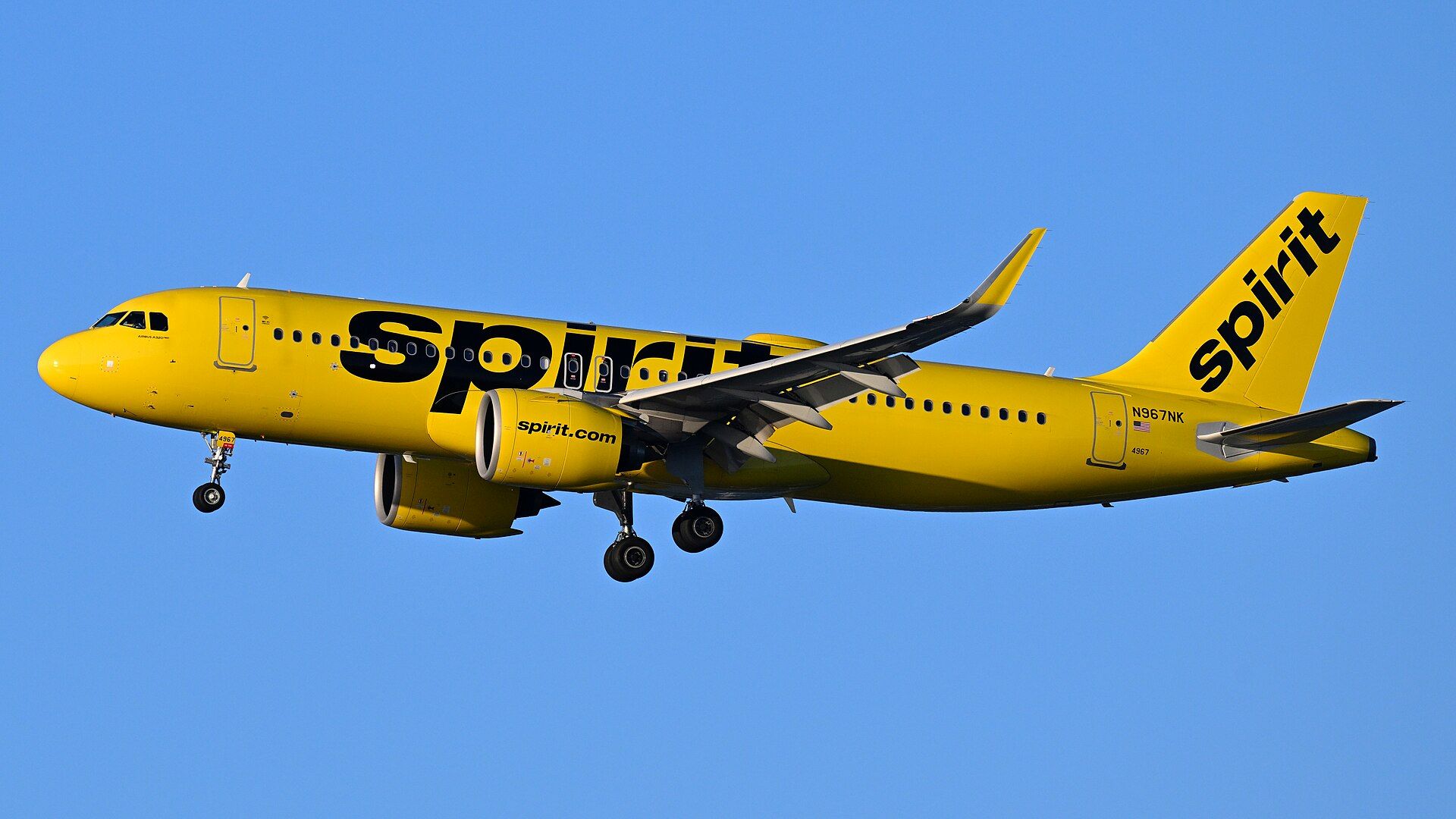
It happened fast. On May 2, 2026, at 3 a.m. Eastern time, Spirit Airlines cut off its engines for good. No advanced warning for passengers. No final farewell tour. Just a press release, a website update, and roughly 60,000 stranded travelers scrambling to find a seat on a plane they did not book. The airline that pioneered the bare-bones, pay-for-everything model in American aviation had finally run out of runway. And whether you ever set foot on a Spirit jet or not, what happens next in the airfare market directly affects you.
Spirit's collapse is the biggest airline failure in a generation, and its ripple effects are already showing up in ticket prices, route availability, and the broader question of what affordable air travel actually looks like going forward. Here is what you need to know.
How Did We Get Here?
Spirit did not go down in one dramatic moment. It was a slow bleed that stretched across years, bankruptcy filings, a blocked merger, a pandemic hangover, and finally, a war in Iran that sent jet fuel prices through the roof.
The airline had filed for bankruptcy twice in less than 18 months, first in late 2024 and again in August 2025. After the second filing, Spirit reached a deal with creditors in February 2026 to emerge leaner and refocused on its strongest markets. Then, three days later, U.S. and Israeli forces struck Iran, choking off roughly 20% of global oil supply and sending jet fuel prices surging. For an ultra-low-cost carrier that lives and dies on its cost structure, that was the final blow.
Why Sustainable Aviation Fuel Is the Industry's Biggest Bet Right Now
"When you're a low-cost carrier, by definition, you're relying on having a cost advantage. And they just don't have that anymore," said Shye Gilad, a former airline pilot and professor at Georgetown University's McDonough School of Business.
A last-ditch effort to secure a $500 million federal bailout from the Trump administration came close. The White House was open to the deal, which would have given the government up to a 90% stake in the airline. But a key group of creditors rejected the terms, and negotiations fell apart. By Saturday morning, Spirit was done.
The Numbers Behind the Collapse
Spirit ranked as the eighth-largest U.S. airline in 2025 by seats offered, but its footprint was bigger than that number suggests. At its peak, the carrier had a 27% market share at Fort Lauderdale-Hollywood International Airport, making it the dominant airline at one of the country's busiest leisure travel hubs. It served routes across Florida, Las Vegas, Detroit, New York, Houston, and a network of Caribbean and Central American destinations that larger carriers largely ignored or priced out of reach for budget travelers.
When Spirit shut down on May 2, it had approximately 9,000 flights scheduled through the end of the month, representing about 1.8 million seats and an average of 300 daily flights. That is roughly 2% of all domestic U.S. flights that were supposed to operate that summer, now removed from the market overnight. About 50,000 passengers were in mid-trip when the shutdown was announced. The airline confirmed that around 17,000 direct and indirect employees lost their jobs.
What This Means for Your Ticket Price
Here is the uncomfortable truth: you are going to pay more. Analysts who track airfare trends have a name for what Spirit provided to the market. They call it the "Spirit effect," and it did not just apply to Spirit's own routes. The airline's willingness to undercut legacy carriers on price forced major airlines to offer their own stripped-down, low-fare products like basic economy across the board.
"You do not have to fly a small carrier in order to benefit from its presence, because they will bring down the big guys' fares," said William McGee, a senior fellow at the American Economic Liberties Project. Without Spirit competing on those routes, he predicted that "everyone will be paying more."
Historical data backs that up. When Spirit has exited markets in the past, average fares on those routes have jumped by 23%. This summer, with jet fuel costs already elevated across the entire industry due to the Iran conflict, that premium is being stacked on top of an already expensive travel season. American Airlines has noted that every penny increase in jet fuel costs the airline $50 million annually. United has warned that if fuel prices hold at current levels, it could face $11 billion in additional expenses over the course of a year.
The routes most likely to see immediate fare pressure include flights out of Fort Lauderdale, Orlando, Las Vegas, Detroit, Newark, and Houston, as well as leisure routes to the Caribbean and Central America where Spirit was often the only deeply affordable option.
Who Is Moving In?
The moment Spirit went dark, its rivals were ready. Airlines had reportedly been preparing for months as Spirit's shutdown became increasingly inevitable. Within hours of the announcement, major carriers including United Airlines, Delta Air Lines, JetBlue Airways, and Southwest Airlines announced they would cap fares for displaced Spirit passengers at around $200 one-way, a short-term goodwill gesture that also served to rapidly absorb Spirit's former customer base.
Frontier Airlines moved most aggressively. Already serving more than 100 routes that Spirit previously flew, Frontier announced rescue fares and expanded service across 18 former Spirit markets with nine new routes and 15 additional daily flights. The carrier also launched a $199 GoWild All-You-Can-Fly Summer Pass for travelers looking to replace Spirit's budget-first approach with something comparable.
Frontier reported record adjusted revenue of $1.1 billion in the first quarter of 2026, up 17% from the same period a year earlier. Investors responded positively, sending shares up nearly 7%. But analysts were quick to note that despite the strong revenue numbers, Frontier is still posting losses, and the same structural pressures that brought Spirit down, including rising labor costs and the growing sophistication of legacy carriers' low-fare offerings, are present for Frontier too.
"Frontier just reported that it's generating record revenue and filling planes, but they're still losing money," Gilad noted. "This ultra-low-cost model has very little margin for error."
Smaller carriers including Avelo, Breeze, and Allegiant are expected to pick up niche opportunities on specific routes, but none of them operate at the scale needed to replace Spirit's full network. The honest assessment from industry analysts is that no single airline can fill the gap cleanly, and the domestic airfare market will be rebalancing for months, possibly well into 2027.
Is Budget Air Travel Dead?
Not entirely, but the math has gotten harder. The ultra-low-cost model that Spirit pioneered, built on charging for every add-on from carry-on bags to seat selection while keeping base fares artificially low, worked when fuel was cheap and competition was limited. As fuel costs spiked and legacy carriers countered with their own stripped-down fare tiers, Spirit found itself squeezed from both sides with no differentiator left.
Industry restructuring expert James Shea, who worked on airline bankruptcy cases in the early 2000s, believes the market will eventually correct itself. "Generally, what happens is, if there is a vacuum, somebody is going to fill it, because no one's going to leave those routes on the table," he said. Over time, competition returns, and pricing stabilizes. But the near-term reality, particularly for leisure travelers on a tight budget, is that the cheapest fares available this summer will be meaningfully higher than what Spirit was offering as recently as early this year.
For travelers who relied on Spirit to make a Florida weekend or a Caribbean trip financially viable, the calculation for that same trip has changed. The question now is not just whether you can find a deal, but which airline has the will and the capacity to offer one.
What Smart Travelers Should Do Right Now
If your summer plans involved Spirit tickets, check your credit or debit card for automatic refunds, which Spirit began processing immediately after shutdown. Free Spirit loyalty points are currently not redeemable and will be addressed through the bankruptcy process, so do not count on those having value anytime soon. If you booked through a travel agent or with vouchers, reach out directly for guidance on your options.
For anyone still planning summer travel, flexibility is your best tool in a disrupted market. Frontier's fare promotions are worth monitoring, especially for overlapping routes. JetBlue has been quietly expanding its presence at Fort Lauderdale and is well-positioned as an alternative. Southwest remains a competitive option for leisure markets, though its higher cost structure means it will not match Spirit's floor-level pricing.
Booking midweek, checking secondary airports, and being willing to take connecting flights are all strategies that can help offset the fare increases now working their way through the system. Travel credit cards with trip protection are particularly valuable right now, given the volatility in the market.
The Bottom Line
Spirit Airlines was not perfect. Its service earned its share of complaints, and its financial management left much to be desired. But its presence in the market mattered far beyond the passengers who actually flew with it. It kept prices honest on routes that legacy carriers would otherwise price freely, and it opened up air travel to millions of Americans who could not otherwise afford it. That competitive pressure is gone now, and the airline industry, already strained by fuel costs and a disrupted Middle East, is going to feel the absence. Budget travelers will feel it most. Summer 2026 just got more expensive.