Every few decades, aviation makes a bet that changes everything. The jet engine. The wide-body aircraft. The digital cockpit. Right now, the industry is placing its most consequential wager yet, and it does not involve a new plane design or a faster route map. It involves what goes into the tank. Sustainable aviation fuel, or SAF, has quietly moved from an environmental talking point to the central pillar of aviation's long-term survival strategy. And the stakes could not be higher.
For frequent flyers, aviation executives, and anyone who has ever looked out a plane window and wondered what flying will look like in twenty years, SAF is the story worth understanding. It is also a story full of real promise, very real obstacles, and a race against time that the entire industry is watching closely.
What Exactly Is Sustainable Aviation Fuel?
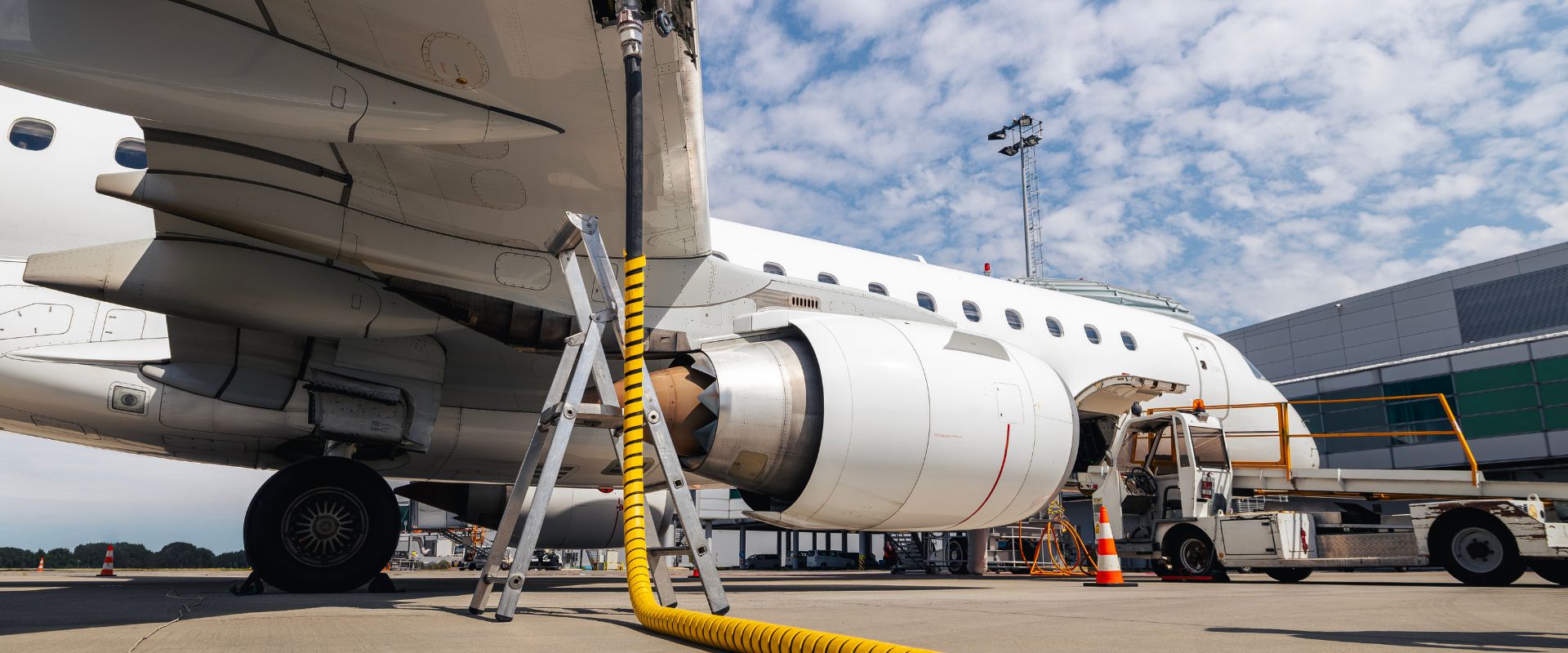
Before diving into the politics and the price tags, it helps to understand what SAF actually is. Unlike conventional jet fuel, which is refined from crude oil, SAF is produced from renewable feedstocks. Think used cooking oil, agricultural waste, municipal solid waste, and even captured carbon dioxide. The end product is chemically similar enough to conventional Jet-A fuel that modern aircraft engines do not need any modification to use it.
That last point is critical. SAF is what the industry calls a drop-in fuel, meaning it can blend directly with existing fuel infrastructure at airports around the world. There is no need to retrofit aircraft or overhaul fueling systems. According to the International Air Transport Association (IATA), eleven biofuel production pathways have already been certified to produce SAF that performs at operationally equivalent levels to conventional jet fuel.
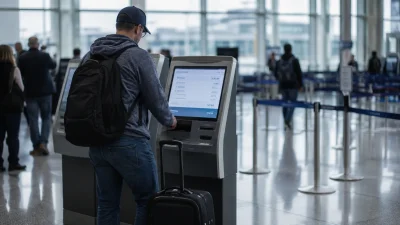
The Intelligent Terminal: How AI and Biometrics are Reimagining the Modern Aviation Landscape
The environmental upside is significant. When you account for the full lifecycle of the fuel, including how the feedstock absorbed carbon while it was alive, SAF can reduce lifecycle carbon emissions by up to 80% compared to traditional jet fuel. For an industry responsible for roughly 2% of global CO2 emissions, that kind of reduction is not just meaningful. It is essential.
The Scale of the Challenge
Here is where the story gets complicated. Despite all the momentum and the pledges, SAF currently accounts for less than 1% of total aviation fuel consumption worldwide. IATA estimates that global SAF output reached approximately 1.9 million tonnes in 2025, double what was produced in 2024. That sounds impressive until you realize that figure covers just 0.7% of aviation's total fuel needs.
To put it in even starker terms: there is not enough sustainable aviation fuel currently available to power the world's commercial airlines for a single week. Delta Air Lines made this point directly, noting the gap between ambition and available supply. The industry collectively wants to reach 10% SAF usage by 2030, but IATA's Director General Willie Walsh has warned publicly that this target is increasingly unrealistic given current production volumes.
Cost is the other mountain to climb. SAF currently costs about two to five times more than conventional jet fuel, depending on the market. In Europe, where regulatory mandates kicked in at the start of 2025, compliance fees from fuel suppliers have pushed those costs even higher. IATA estimates that airlines operating to, from, and within Europe paid a combined premium of $2.9 billion for SAF in 2025 alone.
Which Airlines Are Leading the Charge?
Despite the challenges, some of the world's biggest carriers are moving forward with serious, binding commitments. Their actions signal that, whatever the short-term pain, the strategic direction is clear.
United Airlines became the first commercial airline to purchase SAF for use at three major U.S. hubs simultaneously, partnering with Neste to supply its operations at Houston-Bush, Newark Liberty, and Washington Dulles. The carrier has also committed to purchasing 1.5 billion gallons of next-generation carbon-negative aviation fuel over the next twenty years, backed by an investment in fuel producer Alder Fuels.
Delta Air Lines has secured purchase agreements for 2.9 billion gallons of SAF over the next decade, with the goal of reaching 10% SAF usage across its fleet by 2030. Delta has also founded Americans for Clean Aviation Fuels, a federal coalition pushing for stronger U.S. policy support, and is anchoring the Minnesota SAF Hub, a first-of-its-kind blending facility coalition.
American Airlines has committed to purchasing at least 620 million gallons of SAF between 2025 and 2030, making sustainable fuel a cornerstone of its broader sustainability strategy. Meanwhile, JetBlue has pledged 670 million gallons over a decade, with a specific focus on powering flights out of New York City airports.
On the global stage, a coalition that includes Japan Airlines, Lufthansa, KLM, Emirates, and British Airways has joined forces to accelerate SAF adoption across international routes, signaling that this shift is not limited to American carriers. The Oneworld Alliance has also arranged multi-airline SAF supply from California airports starting in 2027.
The Policy Problem Nobody Wants to Talk About
If airlines are ready to buy SAF and producers are ready to make it, why is supply still so constrained? The uncomfortable answer is that policy design matters as much as good intentions, and in several key markets, policymakers have gotten it wrong.
Europe's ReFuelEU Aviation mandate, which took effect in January 2025, was designed to accelerate SAF adoption across the continent. Instead, it has sharply increased costs without unlocking meaningful new supply. Because the mandate was placed on fuel suppliers rather than airlines, compliance fees got passed downstream, effectively doubling the SAF price premium for carriers flying in and out of European airports. IATA has been vocal in calling for a redesign of these frameworks.
In the United States, the future of SAF tax incentives remains uncertain due to shifting political priorities. The U.S. Department of Energy has set an ambitious target of producing 3 billion gallons of SAF annually by 2030, scaling to 35 billion gallons by 2050, enough to cover the entire sector's projected demand. But targets without stable, long-term policy incentives do not attract the capital investment needed to build out production infrastructure.
BCG's analysis of over 500 aviation executives found that most respondents expect to be observers of the SAF market in 2030, rather than leaders. The biggest barrier cited was not technology or feedstock availability, but the absence of a clear business case to justify large-scale investment. That is a policy failure, not an industry one.
The Science Is Ready. The Infrastructure Is Not.
One of the more encouraging findings in recent research comes from IATA itself. A September 2025 study confirmed that there is enough SAF feedstock available globally to allow the aviation industry to achieve net-zero CO2 emissions by 2050, using only sources that meet strict sustainability criteria and do not cause land use changes. The feedstock is there. The bottleneck is production technology and deployment speed.
Currently, eleven certified production pathways exist for making SAF. The most commercially mature route uses waste oils and agricultural residues. A newer and more scalable pathway, known as power-to-liquid or e-SAF, captures CO2 directly from the atmosphere and combines it with green hydrogen to produce fuel. The carbon math on e-SAF is compelling, but the technology is still early stage and costs can run up to twelve times higher than conventional jet fuel today. Scaling it will require significant public and private investment over the next decade.
Airbus has committed to joining the Minnesota SAF Hub coalition alongside Delta, recognizing that manufacturers and airlines must be aligned on the supply chain buildout. Their CES 2025 partnership announcement underscored a growing consensus that no single company can solve the aviation decarbonization challenge alone. It requires an ecosystem approach: airlines, producers, airports, regulators, and governments working from the same playbook.
What This Means for the Traveler in Seat 12A
For the average passenger, the SAF revolution will be largely invisible, at least in the short term. Flights will not look or feel different. Boarding will not change. The experience at 35,000 feet will be exactly the same. But the conversation is changing on the ground, and premium travelers are increasingly paying attention.
A growing number of corporate travel programs and sustainability-focused travelers are actively choosing carriers with stronger green aviation credentials. Some airlines are beginning to offer passengers the option to purchase SAF certificates, similar to carbon offsets, as part of their booking process. While these programs remain small, they reflect a broader shift in how aviation is positioning itself with an environmentally conscious traveling public.
The cost premium will also eventually reach passengers in some form. Airlines are already signaling that fuel surcharges tied to SAF compliance, particularly in European markets, may become a standard part of airfare. How transparent carriers choose to be about this, and how much they absorb versus pass on, will likely become a competitive differentiator in the years ahead.
The Runway Ahead
The honest assessment of sustainable aviation fuel in 2026 is this: the destination is clear, the technology is proven, and the commitment from major carriers is real. But the timeline is aggressive, the policy environment is uneven, and the financial math has not yet penciled out at scale. The industry needs governments to build smarter incentives, not heavier mandates. It needs producers to accelerate construction of new facilities. And it needs airlines to hold the line on long-term commitments even when quarterly earnings reports make short-term thinking tempting.
IATA's Fly Net Zero commitment has every major airline pledging carbon neutrality by 2050. SAF is the bridge that gets aviation there while hydrogen and electric propulsion mature over the next two to three decades. The quiet revolution happening in refineries, agricultural fields, and research labs around the world may not make headlines the way a supersonic test flight does. But it is the most consequential transformation in aviation since the jet age. And for anyone who cares about the future of flight, it is worth watching very closely.