
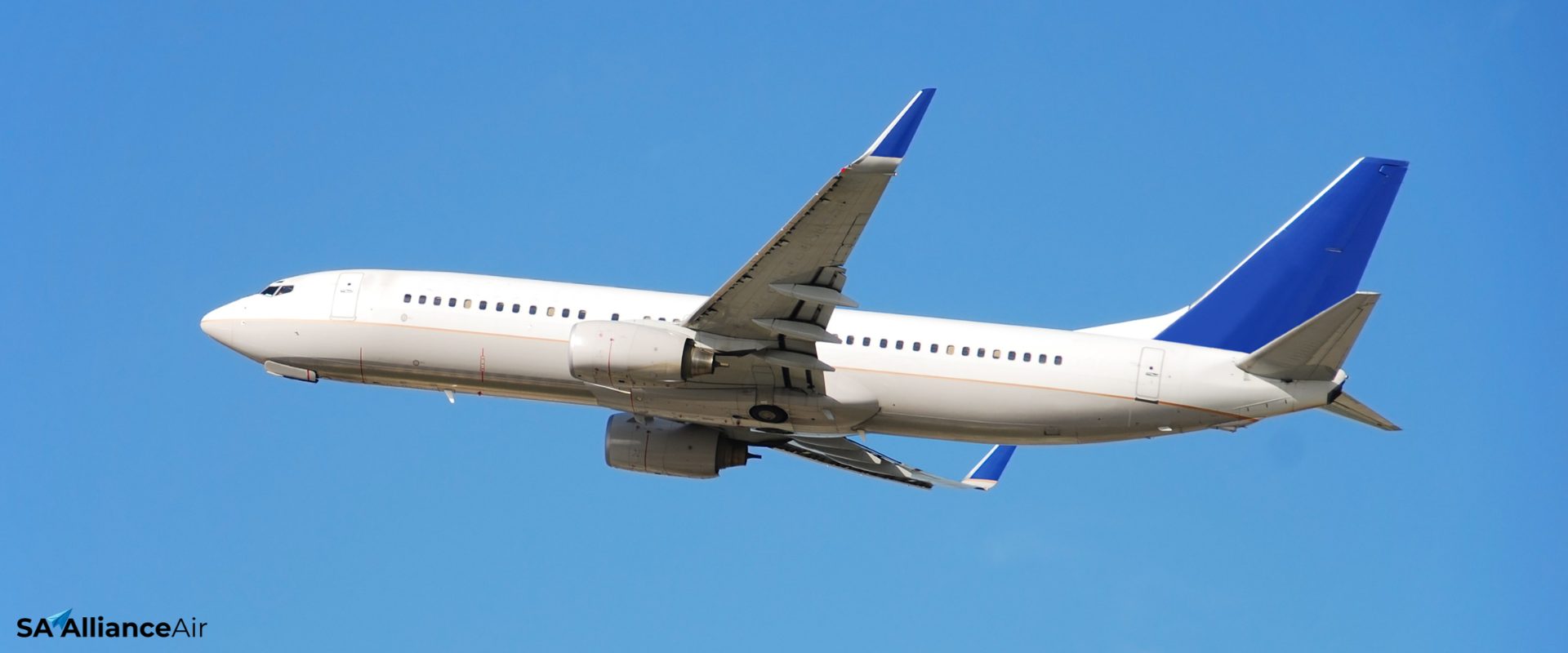
If you’ve ever stepped foot on a commercial flight, there’s a massive chance you’ve been inside a Boeing 737. It’s the "OG" of the narrow-body world, a plane so ubiquitous that at any given second, there are probably over 2,000 of them screaming through the clouds. From theic "Jurassics" to the high-tech MAX, the 737 is the ultimate aviation survivor.
Between the legendary reliability and the headline-grabbing drama of recent years, the 737 is a complex beast. At SA Alliance Air, we’re diving deep into the nuts and bolts of this bird. Whether you're a frequent flyer or a total AvGeek, here is the ultimate directory report on the world’s most famous twinjet.
Directory Report: Boeing 737
Airplane Name
Boeing 737 Family (Including the Original,ic, Next Generation/NG, and MAX series).
Airline Carrier
Virtually every major player has or had a 737 in the fleet.
-
The Heavy Hitters: Southwest Airlines (an all-737 fleet), Ryanair, United Airlines, American Airlines, and Delta Air Lines.
-
Global Reach: It’s the backbone for carriers like Copa Airlines, GOL, and Lion Air. If you're flying short-to-medium haul, this is your ride.
Description
The Boeing 737 is a short-to-medium-range, narrow-body, twin-engine jet. Born in the mid-60s to supplement the 727, it’s gone through more "glow-ups" than a Hollywood star.
-
Generations: * Original (-100, -200): The stubby ones with the long, thin engines.
-
Classic (-300, -400, -500): Introduced the CFM56 "flat-bottom" engines (squashed because the plane sits so low to the ground).
-
Next Generation / NG (-600 to -900ER): The 1990s tech update with the iconic blended winglets.
-
MAX (-7, -8, -9, -10): The latest (and controversial) iteration with massive LEAP-1B engines and split-scimitar winglets.
-
Amenities and Perks
Amenities are totally carrier-dependent, but the "Boeing Sky Interior" (BSI) is the gold standard for the modern 737.
-
The Vibe: LED mood lighting that changes from "sunrise" to "night" to help with jet lag.
-
Storage: Larger "Space Bins" that allow you to put your carry-on in sideways (finally!).
-
Tech: Most newer NG and MAX models feature high-speed Wi-Fi and power outlets (USB-A/C or 110V).
-
Seating: Typically a 3-3 layout in Economy. Legroom varies from a cramped 29 inches on budget carriers like Ryanair to a cushy 38 inches in First on Alaska or American.
Any Known Issues
Look, we have to talk about the elephant in the room.
-
MCAS (MAX Series): The Maneuvering Characteristics Augmentation System caused two tragic crashes (Lion Air 610 and Ethiopian 302) due to faulty sensor data and poor pilot training disclosure. This led to a global grounding from 2019 to 2020.
-
Production Quality: Recent headlines involving door plugs (Alaska Flight 1282) and loose bolts have put Boeing's Renton factory under the microscope.
-
The "Old School" Cockpit: Unlike the Airbus A320, the 737 still uses a "yoke" (steering wheel) and cables rather than full side-stick fly-by-wire, which some pilots love for the "feel" and others find archaic.
Life Span
The 737 is built like a tank. On average, a 737 will serve for 25 to 30 years if maintained well. Many are "retired" from passenger service only to be converted into BCFs (Boeing Converted Freighters) to haul your Amazon packages for another decade.
More (Fast Facts)
-
Max Speed: Mach 0.79 (about 530 mph).
-
Range: The MAX 8 can push nearly 3,500 nautical miles, making "thin" transatlantic routes (like New York to Reykjavik) possible.
-
Low Rider: The 737 sits exceptionally low to the ground so it could be serviced at smaller airports without fancy high-lift loaders - a design choice from the 60s that still dictates how it looks today.
The 737 Vibe Check: Why Pilots Love and Hate It
If you talk to a pilot, they’ll tell you the 737 is a "pilot's airplane." It’s manual. It’s physical. You actually feel the wind hitting the control surfaces. But for the passengers? It’s the "blue-collar" hero. It’s not as wide or quiet as the A220, and it doesn't have the "roomy" feel of the Airbus A320’s wider cabin.
According to a 2025 fleet survey by Simple Flying, the 737 family still accounts for roughly 25% of the world's commercial fleet. That is insane longevity.
The "Low-Down" on the Tech
The 737’s evolution is a masterclass in "if it ain't broke, don't fix it—just add bigger engines." The problem? Every time they added bigger engines (which are more fuel-efficient), they had to move them further forward and higher up because the 737 is so low to the ground. This changed the plane's center of gravity and handling, which is exactly why they invented the MCAS software for the MAX.
Pro-Tip for Travelers: If you want the best 737 experience, look for the Boeing Sky Interior. It makes the cabin feel twice as big and saves you from that claustrophobic "tube" feeling.
The Verdict
The Boeing 737 is the ultimate survivor. It’s been through the highest of highs and the lowest of lows. Is it the most comfortable plane? Maybe not. Is it the most advanced? Definitely not. But it is the jet that brought affordable air travel to the masses.
As we look toward 2027 and beyond, Boeing is under immense pressure to prove the 737 is still the "Safest Way to Fly." For now, it remains the backbone of global aviation—the loud, proud, and slightly cramped king of the short-haul.